Review mobile app development costs by user journeys, backend scope, platform testing and store release. Compare proposals using a clear worked worksheet.
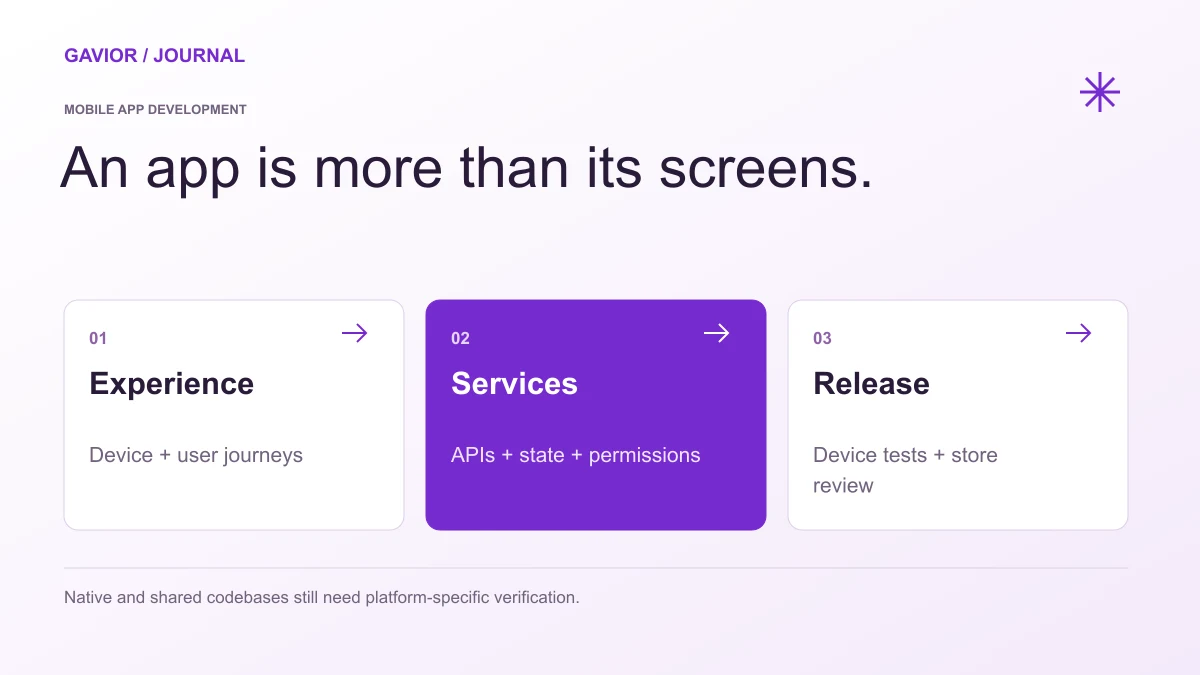
Native and cross-platform delivery both need testing on the intended devices. View full-size image ↗
Mobile app development cost depends on user journeys, platform targets, backend services, integrations, device testing and release responsibilities. Compare native and cross-platform proposals against the same behaviour and acceptance criteria. Separate implementation from account fees, hosting, third-party usage, maintenance and future product changes.
Make your move
Ready to turn a better idea into a better business?
Gavior scopes mobile application development around the actual product. This guide replaces an earlier unsupported pricing and savings table. It does not publish a universal app price, guarantee store approval or promise a fixed performance level for a particular framework.
Which parts of an app need separate estimates?
An app includes more than visible screens. Accounts, permissions, data synchronisation, notifications, operator tools and unsuccessful journeys need design and engineering decisions. Identify any existing backend and whether its behaviour has been verified for the proposed app.
Work area
Questions that affect effort
User experience
Which roles, journeys, states and devices are included?
Mobile application
Which platform capabilities, permissions and interactions are required?
Backend and admin
Which APIs, data models, account controls and operator tools exist?
Integrations
Which providers, credentials, environments and failure paths apply?
Testing
Which devices, OS versions, network conditions and regression checks matter?
Release and handover
Who owns signing, store submissions, documentation and support?
Use the mobile MVP acceptance checklist to turn those decisions into a reviewable brief. Record excluded functionality and the person responsible for supplying each external dependency.
Is cross-platform development always cheaper than native?
No. A shared codebase can reduce duplication in some applications, but the benefit depends on the workflow, platform-specific capabilities and the team's implementation approach. Separate native implementations can also share backend services and product requirements.
Ask suppliers to explain the proposed boundary: what is shared, what needs platform-specific work and how it will be tested. Camera behaviour, background tasks, local data, payments or specialised hardware can change the implementation and verification effort. Do not accept a fixed savings percentage or “zero lag” claim without evidence for the actual product.
Compare a representative task on the intended devices before treating a framework choice as the acceptance result. The proposal should name the supported platform scope and the checks used to review it.
What does an illustrative cost worksheet look like?
Request the supplier's work breakdown and commercial model. The fictional example below demonstrates how line items combine; it is not a real quotation, a market benchmark or a timeline for any particular app.
Illustrative package
Assumed effort
Journeys, prototype and screen states
20 hours
Mobile application behaviour
50 hours
Backend and operator workflow
40 hours
Device testing and corrections
20 hours
Release preparation and handover
10 hours
Total
140 hours
At an assumed ₹1,500 per hour, 140 × ₹1,500 = ₹210,000. The rate and hours are sample inputs, not Gavior pricing. A real proposal may use fixed milestones instead. In either model, identify assumptions about API readiness, design approval, migrations and customer-supplied accounts before agreeing the scope.
If an integration is uncertain, investigate it before promising the implementation cost. Ask how the estimate changes if the current backend cannot support the required permissions or synchronisation rules.
What should the store-release scope include?
Name the owner of developer accounts, signing assets, product listings, privacy information, review access and the submission process. Plan how the team handles review questions and subsequent changes. A development agency cannot guarantee an independent platform's approval.
Apple's App Review Guidelines describe completeness, review access and functionality considerations. Prepare the review environment and account information the product requires. A repackaged website should not be assumed to satisfy the App Store's functionality expectations.
Google Play's testing requirements for new personal developer accounts apply to the account types and conditions described there. Check the current requirements for the customer's account when planning the release. A development schedule should distinguish engineering work from testing, customer decisions and platform review.
Which costs continue after the first release?
Record hosting, storage, email or messaging, third-party APIs, support and future platform maintenance separately. Identify usage limits and the party who receives each provider's bill. Clarify whether the maintenance arrangement includes compatibility updates, incident response and new features.
Ownership matters too. The receiving team should understand source access, builds, signing, deployment, monitoring and account recovery. A low initial quotation is difficult to assess if it leaves these responsibilities unresolved.
The software rate comparison guide explains why an hourly figure alone does not establish project cost. Use the same requirements and acceptance evidence for every supplier.
How can you review an agency's relevant work?
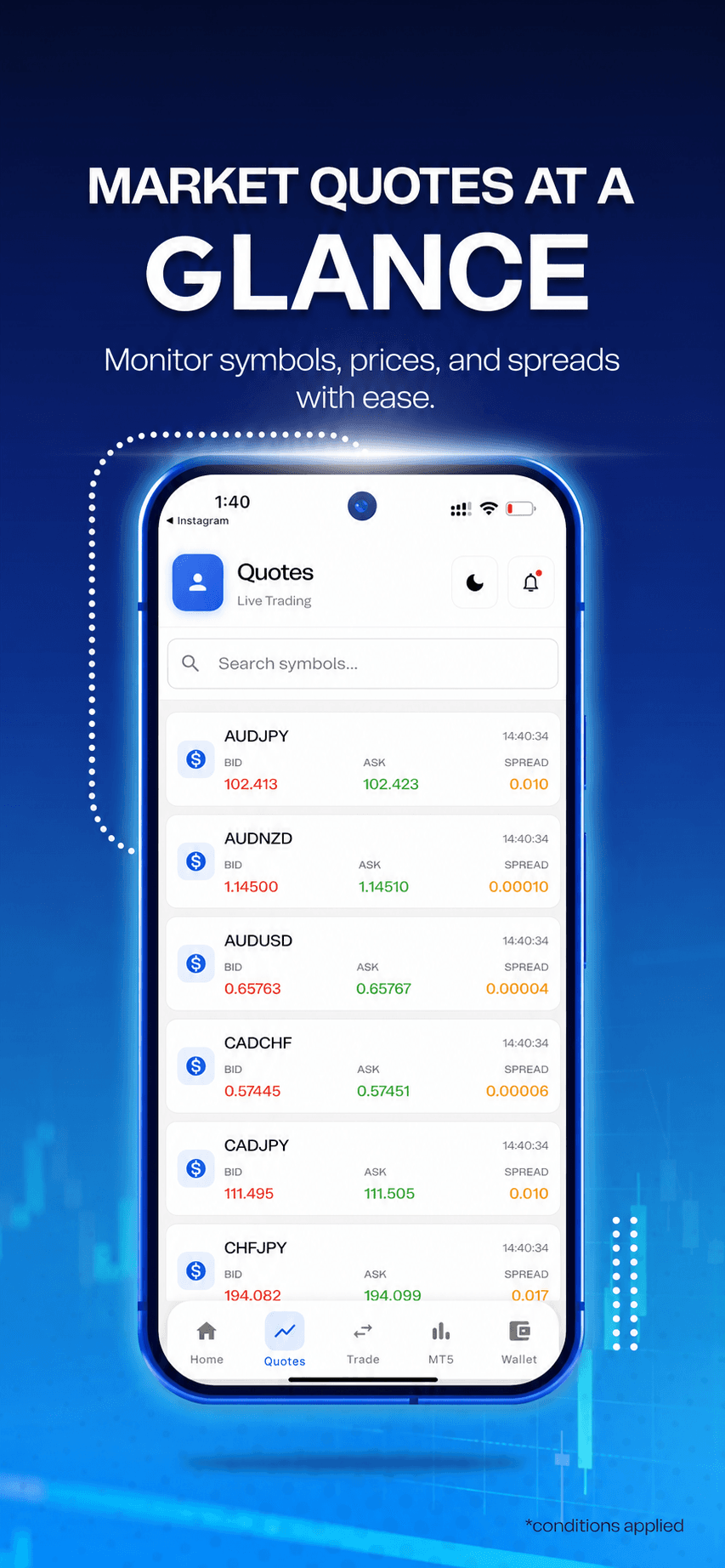
Review interfaces and complete journeys that relate to the proposed product, then ask the agency to explain its contribution and the boundaries of the evidence. A screenshot can demonstrate presentation and navigation. It cannot prove the technology stack, implementation price or measured business outcomes on its own.
Our anonymous mobile client presentation provides a concrete interface example with client branding removed. To discuss your mobile app, share the main user task, intended platforms, existing backend, integration needs and release constraints. Gavior can then define a scoped proposal.
Frequently asked questions
Can an agency quote an app from a short feature list?
A feature list can support an initial discussion, but a reliable scoped proposal needs roles, journeys, integrations, platform targets, unsuccessful states and release responsibilities. Identify unresolved items before committing to delivery.
Does cross-platform mean one round of testing?
No. Shared implementation still needs verification on the intended platforms, devices and conditions. Agree the specific test coverage and acceptance evidence in the proposal.
Is store approval guaranteed when development is complete?
No. Apple and Google control their review processes. An agency can prepare a submission and address issues within an agreed scope, but should not promise independent approval.
What should I send Gavior for an app estimate?
Send the intended users, core task, platform targets, existing designs or code, backend details, integrations and release constraints. Mention any required offline behaviour or specialist device capability.
Client work · Mobile interfaceClient application presentation with branding removed. This shows interface work; it does not establish the app's price, development framework or measured business results.
G
Gavior Editorial Team
Mobile and product engineering editorial team at Gavior
The Gavior Editorial Team shares practical guidance on product design, software engineering, cloud delivery and AI automation.