
Prop Firm Platform
A trader command center that brings funded accounts, challenge progress, trading rules and payout actions into one workspace.
Software shaped around the work
Purpose-built software when existing tools leave important gaps. Turn the problem into a focused specification, deliver a useful first version and keep ownership clear after launch.
Explore the scopeBuilt around your goals. Scoped before we build.
Selected work
A trader command center that brings funded accounts, challenge progress, trading rules and payout actions into one workspace.
A brokerage client experience connecting wallets, trading accounts, market information and customer tools.
Custom software development creates applications for requirements that standard products cannot adequately meet. Gavior covers discovery, architecture, interface development, integrations and delivery planning with scope and support responsibilities agreed upfront.
The scope
Your proposal defines what is included, how it will be reviewed and what your team receives. Here is what we can plan together.
Define workflows, business rules and acceptance criteria before estimating the build.
Implement agreed features with documented interfaces and appropriate automated checks.
Document environments, dependencies and the responsibilities for ongoing operation.
Where it fits
Different teams need different solutions. These are example starting points, not claims about past client outcomes.
Support workflows that cannot be configured cleanly in existing products.
Plan data migration and compatibility instead of discarding essential business logic.
Build a focused layer connecting the tools the business needs to keep.
From brief to handover
No black box. You can see the decisions, review the work and understand what happens next.
Identify why existing tools do not solve the important requirements.
Agree boundaries, dependencies and a demonstrable end-to-end workflow.
Deliver increments with feedback from real users and data owners.
Complete deployment, documentation, training and agreed maintenance arrangements.
Make an informed decision
Tell us the outcome, your current setup and the constraints. We will recommend a scope before you commit to a build.
Explore pricing & engagement optionsProvide sample workflows, existing constraints and a decision-maker.
Plan the maintenance budget and source ownership alongside the initial build.
Selection depends on your requirements, existing systems and budget.
Before we begin
When critical workflows, integration needs or ownership requirements cannot be met reasonably with existing tools. Compare total maintenance cost as well as initial build cost.
We first review the repository, dependencies, deployment and rights to the code. That assessment identifies what can be extended safely.
Changes should describe the new requirement and its effect on cost, timing and acceptance criteria before implementation.
No. Warranty, ongoing support, security updates and feature development need explicit terms and an operating owner.
Think connected
Plan with confidence
 Software Development
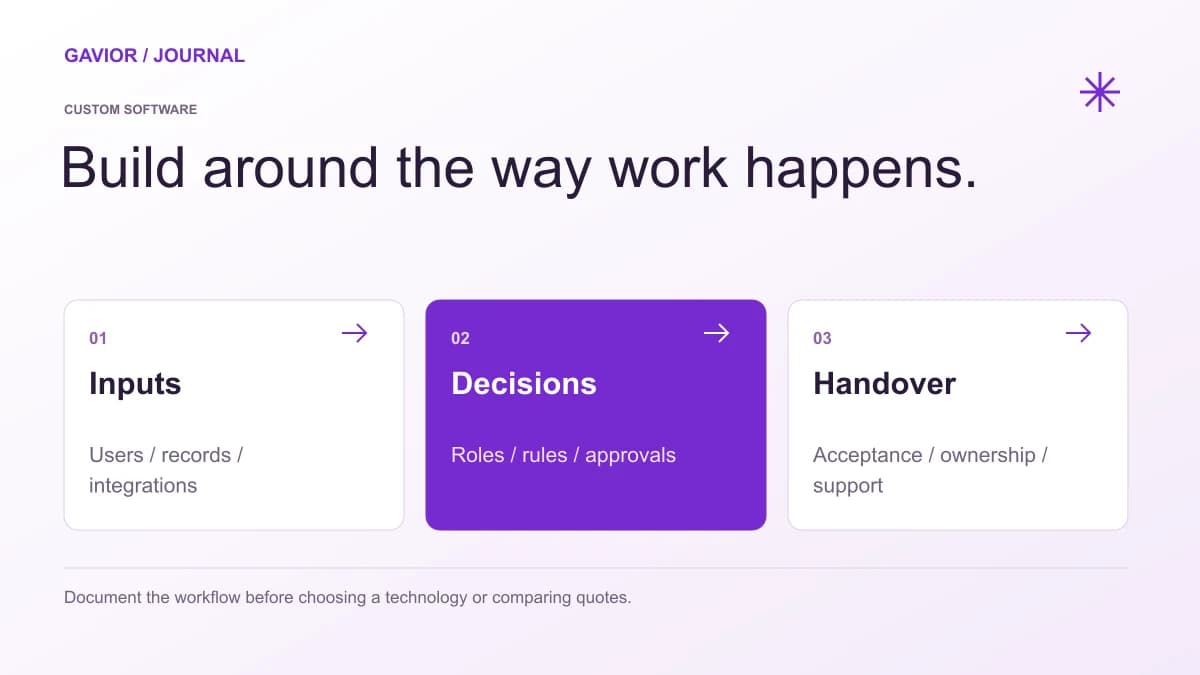
Compare an existing SaaS product, a custom application and a combined approach using workflow fit, data ownership, operating costs and an exit plan.
StrategyBuilding enterprise web applications is inherently complex. We dissect the common pitfalls of enterprise software and provide a blueprint for operating without friction.
 Software Engineering
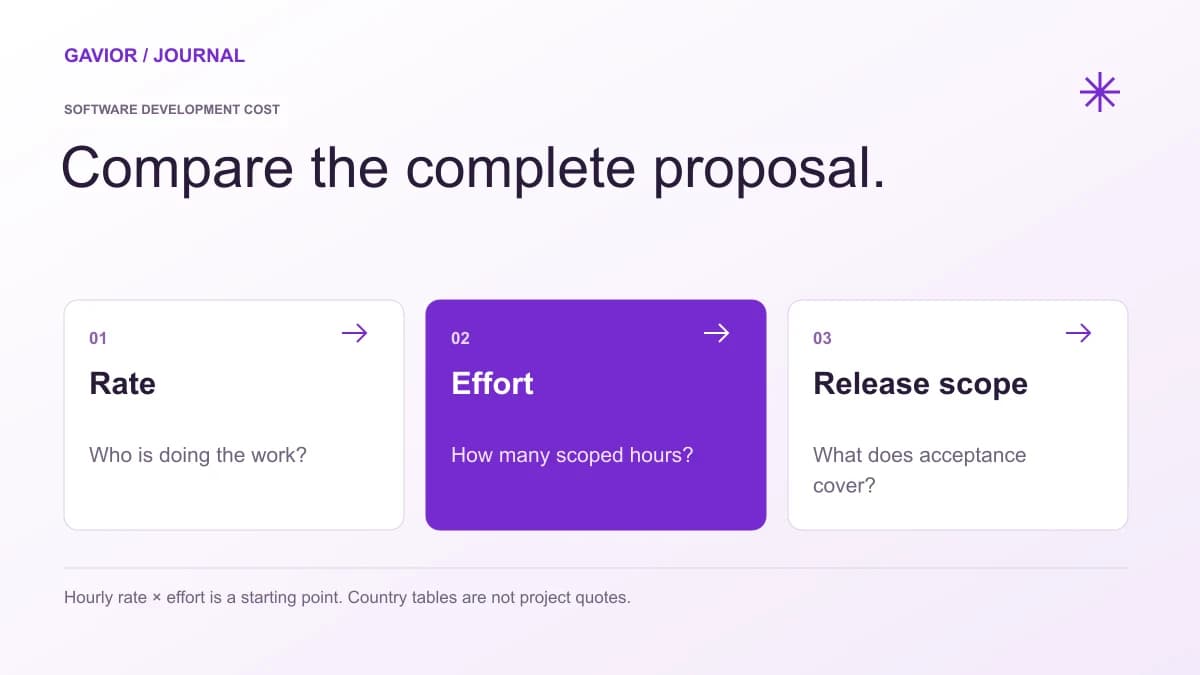
Compare published software development rates by country with their source limits. Use a quote worksheet to review hours, delivery scope and ownership cost.
Let’s make it useful
A few focused questions. A clearer starting point for your project.