
01
Workflow and permissions model
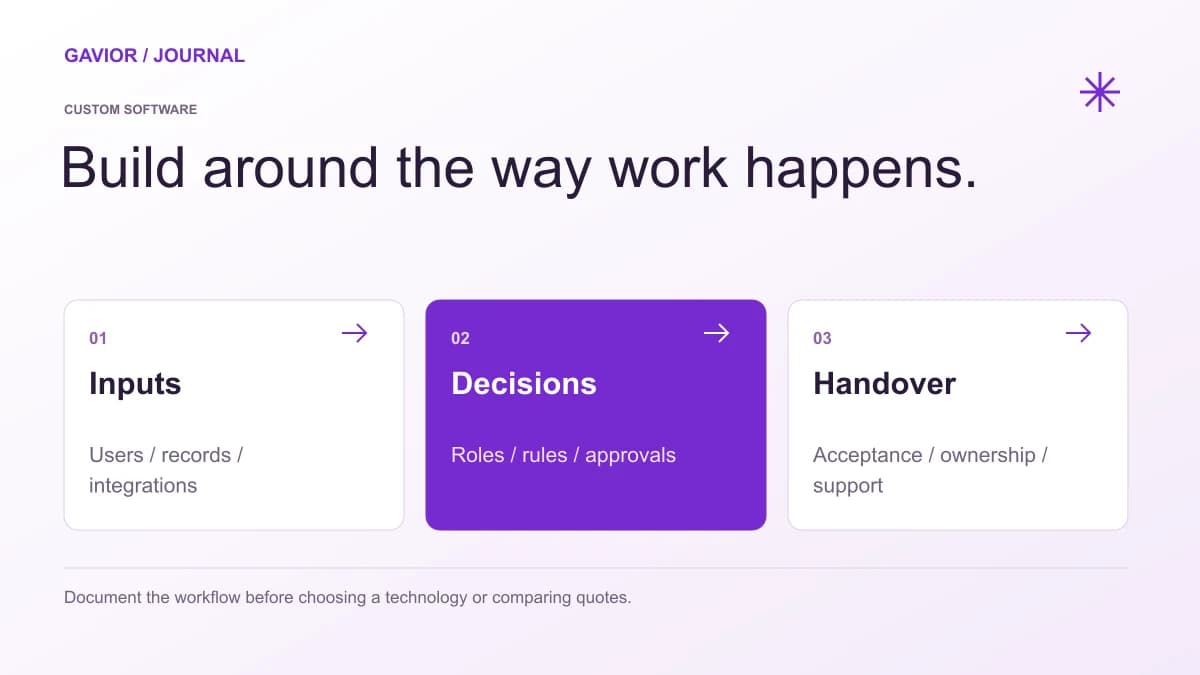
Document roles, approval paths and the data each user may view or change.
Make work easier to coordinate
Internal platforms and customer portals built around real roles, approvals and exceptions. Replace disconnected work with a system people can understand and your team can maintain.
Explore the scopeBuilt around your goals. Scoped before we build.
Enterprise application development turns defined business workflows into secure web software with role-based access, integrations, reporting and operational support. Discovery establishes how the application will fit existing systems.
The scope
Your proposal defines what is included, how it will be reviewed and what your team receives. Here is what we can plan together.
Document roles, approval paths and the data each user may view or change.
Build the agreed screens, integrations, exception handling and reporting views.
Provide deployment notes, audit requirements, backup responsibilities and administrator guidance.
Where it fits
Different teams need different solutions. These are example starting points, not claims about past client outcomes.
Coordinate requests, reviews and decisions without losing the history in email threads.
Give external users appropriate access to their records, documents and service updates.
Connect information across sales, operations and finance while respecting system ownership.
From brief to handover
No black box. You can see the decisions, review the work and understand what happens next.
Map current actions, exceptions, data owners and process constraints.
Review representative journeys and access rules with the people doing the work.
Implement priority workflows with integration checks and stakeholder feedback.
Plan migration, user training, production monitoring and a way to recover from failed changes.
Make an informed decision
Tell us the outcome, your current setup and the constraints. We will recommend a scope before you commit to a build.
Explore pricing & engagement optionsNominate process owners and provide representative anonymised records.
Agree retention, migration and compliance requirements before choosing the architecture.
Selection depends on your requirements, existing systems and budget.
Before we begin
We review available APIs, data formats and vendor permissions first. Some integrations require paid licences or changes to the source system.
Roles and record-level access are agreed during discovery and checked in the application. Administrative actions and sensitive changes may also require an audit trail.
No. A phased workflow or department rollout can reduce disruption, provided temporary integrations and the source of truth are explicit.
Support scope should identify incident handling, updates, monitoring and the internal owner. Ongoing operation is a separate commitment from initial implementation.
Think connected
Plan with confidence
 Software Development
Compare an existing SaaS product, a custom application and a combined approach using workflow fit, data ownership, operating costs and an exit plan.
StrategyBuilding enterprise web applications is inherently complex. We dissect the common pitfalls of enterprise software and provide a blueprint for operating without friction.
ManufacturingPlan a manufacturing operations dashboard around the decisions supervisors and managers make every day, not a wall of disconnected production metrics.
Let’s make it useful
A few focused questions. A clearer starting point for your project.