SaaS MVP Cost: How to Review a Development Estimate
Gavior Editorial Team
Product and engineering editorial team
Published: 2026-10-27Updated: 2026-11-07
Review a SaaS MVP estimate by workflow, integrations, release checks and recurring costs. Use an illustrative worksheet to compare proposals fairly.
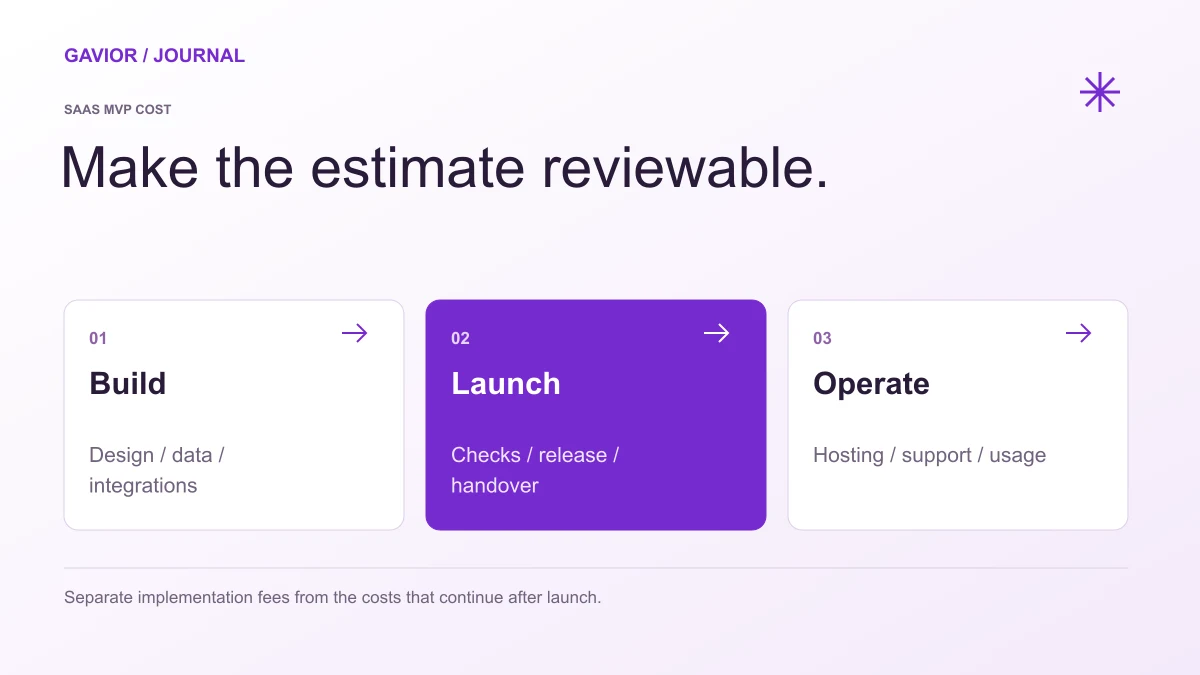
Compare the same implementation scope and list recurring costs separately. View full-size image ↗
A SaaS MVP estimate depends on the customer workflows, permissions, integrations, existing code and release responsibilities in scope. Compare proposals against the same acceptance criteria and exclusions. Separate development fees from hosting, payment-provider charges, email, AI usage and ongoing support.
Make your move
Ready to turn a better idea into a better business?
Gavior prices build milestones after scoping the actual product. This guide explains how to review the estimate; it does not publish a universal price or promise that every MVP fits a fixed timeline. Explore SaaS development services and SaaS engagement options for how scope sprints, builds and iteration work.
Why can two quotes for the same idea differ?
An idea such as "a customer portal with payments" leaves important decisions open. One proposal may cover a form and a hosted checkout. Another may include organizations, multiple roles, a subscription lifecycle, data migration, operator tools and a support arrangement.
Before comparing the totals, compare the release boundaries. Ask each team to identify what a customer can finish, what the operator must do and what is explicitly deferred. The SaaS MVP scope checklist provides a worked example.
What should an estimate break down?
Work area
Inputs needed for an estimate
Useful review evidence
Product and UX
User journeys, existing designs, approval availability
Prototype and included screen states
Accounts and permissions
Roles, organizations and access boundaries
Permission matrix and test cases
Core workflow
Data fields, statuses, business rules
Acceptance criteria for the complete journey
Integrations
API access, sandbox availability, failure behaviour
A named integration boundary and its owner
Release and handover
Environments, deployment, documentation, support
Release checklist and responsibility list
The estimate should explain uncertainty rather than hide it. For example, an integration may need a short technical review before the team can commit to a delivery milestone. A clearly priced discovery step is easier to assess than an unexplained allowance that appears later as a change request.
How can you compare proposals without inventing a universal rate?
Use the same illustrative worksheet for each supplier. Enter the values from that supplier's proposal; do not fill missing entries with assumptions.
If you are comparing teams in different countries, use the software development rates guide to distinguish directory price bands, employee wages and actual project quotes. A lower hourly rate does not by itself establish a lower delivery cost.
Worksheet item
Record from the proposal
Scope and design
Fee, deliverables and revision boundary
Build milestone one
Workflow, acceptance check and price
Build milestone two
Workflow, acceptance check and price
Release and handover
Included work and any separate fee
Optional work
Features excluded from the committed total
Recurring operation
Hosting, provider usage and support assumptions
For a defined comparison period, total the agreed one-time fees and the expected recurring charges under the same usage assumptions. Label variable costs separately. Taxes, currency and provider pricing should follow the actual proposal and current supplier terms.
Which costs continue after launch?
Hosting and storage depend on the deployed architecture and usage. Email and messaging providers may charge by volume. Payment fees depend on the provider and market. AI features may have usage charges. Monitoring, backups and support can be included, separately priced or owned by the customer; the agreement needs to say which.
Ask who owns each provider account and who receives usage alerts. A development fee does not by itself explain operating cost. For example, Gavior Orbit's integration guides distinguish a publishing destination from the application responsible for the public website.
Check the SaaS handover and operating-responsibility checklist alongside those recurring charges. A proposal should say who deploys, restores, monitors and supports the product, rather than leave those duties implied by the build fee.
What changes the delivery schedule?
Integration access, data migration, review availability, unresolved product decisions and changes to scope can affect the schedule. An estimate should identify dependencies and milestone acceptance, rather than present a date without assumptions.
Discuss the change process before development: who can request a change, how its effect is estimated and how approval is recorded. Keep the agreed first release separate from the improvement backlog.
What should you ask before approving the build?
Which complete customer journey does this price cover?
Which integrations have been reviewed and which remain uncertain?
What happens when a request, payment or provider call fails?
Which acceptance checks release each milestone?
What source access, documentation and support are included?
Which recurring charges and exclusions are outside the build fee?
If these answers are missing, request clarification before comparing the headline totals. Discuss your SaaS MVP with your current scope, budget constraints and intended release requirements.
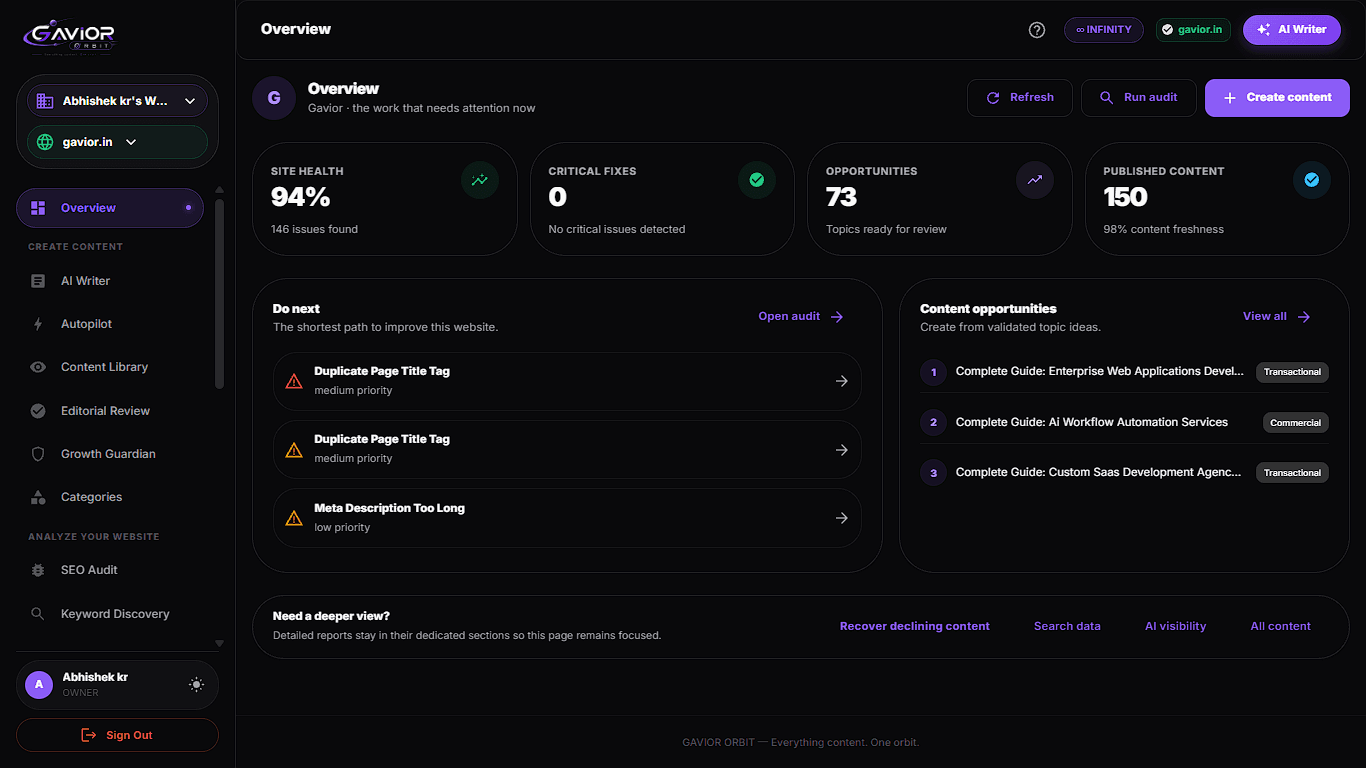
Our own product · Gavior OrbitA real Gavior Orbit interface. The captured figures describe a screen state; they are not performance tests, traffic growth or customer outcomes.
G
Gavior Editorial Team
Product and engineering editorial team at Gavior
The Gavior Editorial Team shares practical guidance on product design, software engineering, cloud delivery and AI automation.