
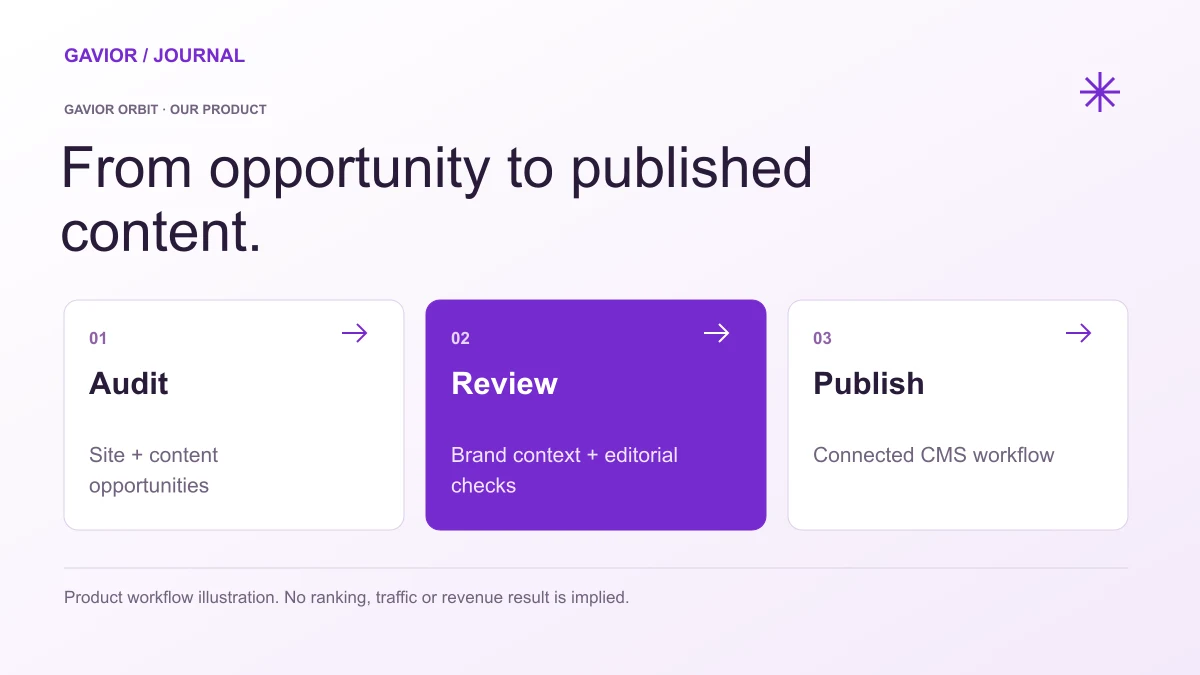
Multi channel AI content repurposing is the automated extraction, transformation, and distribution of a single core asset into platform-native formats across digital touchpoints. Instead of manually retyping blog posts into LinkedIn updates, email newsletters, and video scripts, modern software engines parse semantic structure to broadcast native variations directly to your publishing endpoints. For decision makers and digital teams, this practice transforms an isolated article into an organic distribution engine without expanding headcount or diluting technical depth.
Key Takeaways
- Repurposing is an engineering workflow problem, not a manual editorial chore.
- Context-native transformation outperforms simple copy-pasting by matching platform-specific user intent and schema.
- Gavior Orbit uses Orbital Echo to convert long-form technical assets into cross-channel formats and CMS drafts automatically.
- Pairing automated text transformation with structured video editing and custom web development maximizes long-tail authority.
The Structural Bottleneck of Manual Content Distribution
Most content operations hit a wall for a simple reason: writing deep, authoritative content takes significant engineering and subject-matter expertise, but formatting it for five different channels burns out the team. A developer or product marketer spends ten hours documenting an architectural shift or product framework. That piece goes live on the corporate blog. Then, distribution stalls.
Why does this happen? Translating a 2,500-word technical deep-dive into platform-appropriate snippets requires contextual adaptation. A casual post on X demands punchy bullets and immediate takeaways. A LinkedIn post requires executive context and business outcomes. An email newsletter needs conversational brevity. When humans tackle this manually, consistency slips. Updates get delayed, backlogs grow, and high-value research gathers dust in an unindexed blog archive.
Treating multi channel content transformation as an editorial afterthought wastes capital. High-growth organizations treat content as structured data that can be programmatically restructured and dispatched across the web.
The Mechanics of Autonomous Multi Channel AI Content Repurposing
Modern multi channel AI content repurposing operates on programmatic decomposition. An autonomous content operating system does not simply run an article through a basic summarizer. Instead, it parses the document's semantic hierarchy, isolating primary arguments, supporting data, actionable code snippets, and structural conclusions.
Inside Gavior Orbit, our autonomous AI content OS, this capability is handled by Orbital Echo. The engine ingests a validated master asset and routes its components through purpose-built transformation pipelines:
- Executive Social Threads: Orbital Echo isolates counterintuitive arguments and transforms them into standalone, high-signal posts calibrated for professional feeds.
- CMS-Native Syndication: Formats are adjusted automatically for external platforms, preserving semantic HTML elements, schema metadata, and clean heading structures for WordPress, Webflow, Shopify, or Ghost.
- Visual & Video Prompts: Core takeaways are extracted into storyboards and structured scripts ready for production, connecting narrative copy with creative assets.
- Newsletter Modules: The central thesis is converted into conversational email digests designed to drive referral traffic back to the primary domain.
By delegating distribution mechanics to autonomous workflows, your technical leaders stay focused on core engineering, software architecture, and product innovation.
Actionable Tips for Designing a Repurposing Pipeline
Building an automated pipeline requires strict operational guardrails. Without structure, automated tools simply generate low-quality noise across more channels. Here are actionable tips to ensure your repurposing engine maintains technical authority and brand integrity:
1. Anchor Every Derivative in a Verified Master Asset
Never generate derivative micro-content out of thin air. AI models hallucinate when given open-ended creative prompts without source constraints. Always establish a canonical, human-reviewed technical piece—such as an engineering breakdown, customer case study, or white paper—as the single source of truth. Every social post, email snippet, and summary must reference back to this master file.
2. Match the Semantic Density to the Channel
Different platforms reward different information densities. Search engines demand exhaustive topical coverage and structured markup. Social channels demand rapid readability and immediate commercial insight. When configuring multi channel AI content repurposing pipelines, program your prompt templates to adapt the tone, length, and formatting rules specifically for each platform rather than cross-posting identical text.
3. Integrate Multi-Format Production
Text is only one part of modern distribution. Pair your written transformation pipelines with our dedicated Video Editing and graphic design processes. Turning key data points into motion graphics, subtitled short clips, and high-contrast social cards multiplies the surface area of your core message.
4. Retain Human Editorial Review Gates
Full automation does not mean unmonitored publishing. The most resilient organizations build review controls into their pipeline. Gavior designs AI workflows where automated systems draft platform-native variations, organize media, and stage posts inside an intuitive dashboard, leaving final approval to brand stewards before production deployment.
Case Studies and Expert Analysis: Measuring Repurposing ROI
To understand the strategic impact of autonomous distribution, consider how modern engineering firms eliminate operational drag through programmatic pipelines.
B2B Software Platform: Eliminating Editorial Drag
An enterprise SaaS company producing regular technical product updates faced an ongoing bottleneck: their engineering team wrote comprehensive documentation, but marketing lacked the bandwidth to adapt those release notes into customer emails, LinkedIn posts, and community tutorials. Marketing was constantly three weeks behind product releases.
By deploying autonomous repurposing workflows, the company established an automated pipeline. Now, every validated release document automatically generates three technical social posts, an executive newsletter summary, and a community announcement draft. Editorial lag fell to zero, and the platform maintained unified messaging across every communication channel.
Expert Analysis: The Shift to Programmatic Brand Authority
Expert analysis shows that organic discovery is no longer restricted to traditional search engines. Buyers discover software, agencies, and technical solutions inside AI chat interfaces, executive feeds, and curated community newsletters. When an organization republishes a single insight across four distinct, platform-optimized mediums, it creates multiple semantic touchpoints for both human prospects and generative search engines.
Building brand authority today means meeting buyers where they already spend attention. Hand-crafting every derivative variant is no longer economically viable when competing against software-driven distribution pipelines.
Tactical Roadmap for Implementation
Transitioning from manual repurposing to an autonomous content engine requires clear milestones. Here is the operational blueprint we use when helping enterprises scale their distribution infrastructure:
- Audit Existing Digital Assets: Inventory your highest-performing blog posts, documentation, and product pages. These form the initial training and transformation base.
- Standardize Channel Templates: Define the exact structural parameters for every downstream channel—character limits, tone profiles, structural hooks, and call-to-action variants.
- Deploy Autonomous Engine Capabilities: Implement an integrated system like Gavior Orbit to automate technical auditing, contextual internal linking through Orbital Mesh, and multi-channel asset generation through Orbital Echo.
- Bridge Infrastructure Gaps: Ensure your back-end hosting and web stack can handle sustained traffic growth. Whether deploying custom Web Development, configuring SaaS Development infrastructure, or managing secure cloud environments, high-performance back ends must support your organic acquisition channels.
- Review and Iterate: Monitor engagement metrics across platforms. Refine prompt constraints and delivery cadence based on which formats drive real commercial inquiries.
Frequently Asked Questions
Ready to turn these ideas into results?
Move from insight to action with a solution aligned to your goals.