
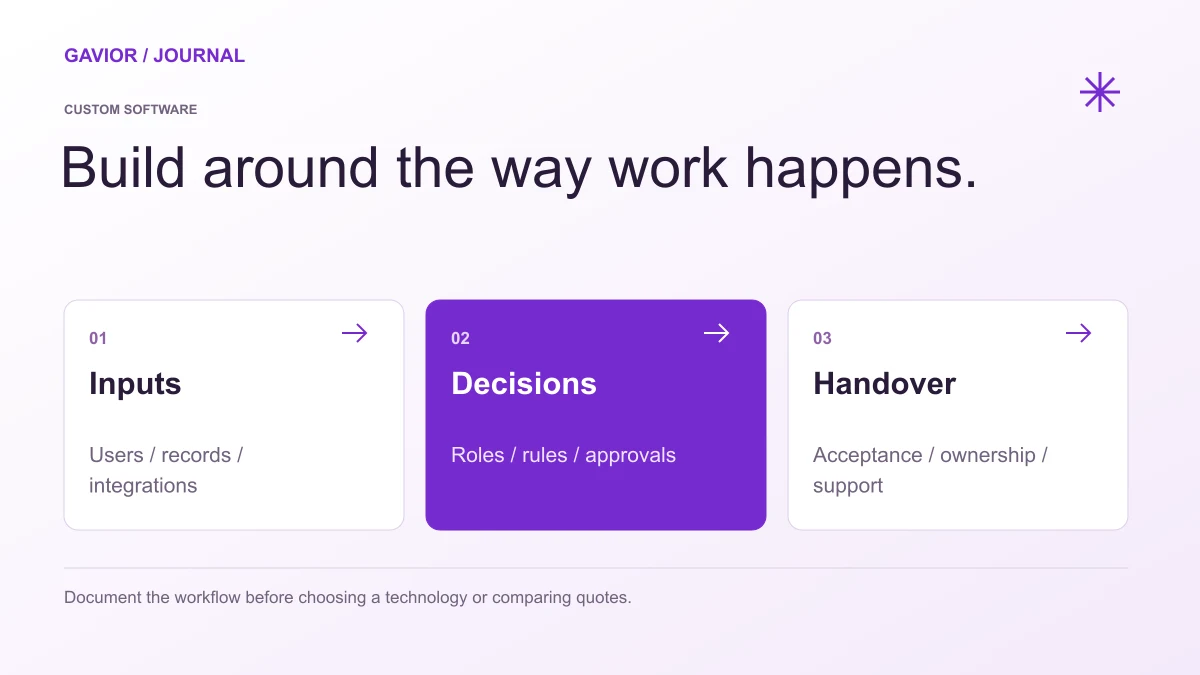
Enterprise AI workflow automation transforms modern SaaS by embedding custom LLM execution, autonomous agentic logic, and Retrieval-Augmented Generation (RAG) directly into cloud backends, replacing rigid off-the-shelf monolithic software with adaptable intelligent infrastructure. Designed for enterprise decision-makers and technology executives, this shift eliminates manual operational bottlenecks and aligns software directly with commercial outcomes. By integrating custom engineering with strategic backend automation, Gavior enables organizations to transition from passive subscription tools to high-performance, self-executing software platforms.
- Custom AI automation replaces brittle monolithic software with self-healing, agentic workflows.
- Multi-tenant SaaS architectures enforce secure tenant boundaries while routing unstructured data through custom RAG pipelines.
- Total Cost of Ownership (TCO) models favor custom software engineering over recurring, per-seat SaaS subscription bloat at scale.
- Practical enterprise deployment relies on robust cloud infrastructure, granular access control, and human-in-the-loop governance.
The Architectural Shift From Legacy Monoliths to Autonomous SaaS
Traditional cloud platforms relies on static databases, rigid rule engines, and repetitive user interactions that require human labor whenever unexpected data enters the pipeline. When organizations scale past baseline activity thresholds, these legacy setups introduce immense operational overhead. Staff members waste thousands of hours manually copying information across mismatched portals, verifying documents, and resolving exception flags. Integrating generative AI engines and intelligent orchestration directly into core backend logic changes this paradigm completely. Software shifts from a passive record-keeper into an active operational engine.
Moving away from off-the-shelf software grants technology leaders full authority over data governance, system security, and shadow IT risks. Off-the-shelf platforms force businesses to alter their internal logic to match standardized vendor boundaries. In contrast, custom SaaS Development allows organizations to encode their unique operational blueprints directly into intelligent software agents. These agents process unstructured documents, parse complex transactional inputs, and orchestrate external API calls automatically, preserving competitive differentiation while accelerating daily throughput.
Technical Foundation: Multi-Tenant Architecture and Data Orchestration
Architecting enterprise-grade platforms requires a disciplined technical foundation. Multi-tenant designs must enforce strict workspace isolation while allowing shared backend compute resources to process heavy AI workloads efficiently. Without secure tenant boundaries, processing multi-tenant data through large language models risks cross-tenant data leaks and compliance violations. Modern Web App Development solves this challenge by decoupling data ingestion layers from model execution environments, applying tenant-specific vector indexes and field-level encryption protocols.
Cloud infrastructure planning dictates platform resilience. Implementing cloud environments on infrastructure like AWS solutions or Azure solutions equips engineering teams with auto-scaling compute groups, automated deployment workflows, and real-time operational monitoring. These cloud frameworks allow dynamic data pipelines to handle sudden processing spikes—such as batch processing thousands of unstructured invoices or syncing global inventory databases—without sacrificing system latency or uptime SLAs.
Financial Economics: Total Cost of Ownership (TCO) and Payback Period
Decision-makers frequently miscalculate software expenses by focusing solely on initial build costs while ignoring the compounding cost of third-party subscriptions. Off-the-shelf SaaS software charges heavy per-seat licensing fees, tier-based feature lockouts, and expensive API overage surcharges. As team headcount and transaction volumes grow, these recurring charges escalate exponentially, creating a permanent drag on operational margins.
Conducting a rigorous expert analysis of build-versus-buy economics demonstrates the long-term financial advantages of custom software engineering. While bespoke AI Automation requires upfront capital expenditure, it eliminates recurring per-user fees and grants complete ownership of core technology assets. Custom enterprise platforms amortize development costs over time while allowing unlimited transaction scaling. Financial frameworks comparing custom development costs against multi-year SaaS licensing prove that growing enterprises achieve significantly shorter payback periods and higher lifetime operating margins through proprietary platforms.
Industry Case Studies and Practical Workflow Examples
Examining real-world case studies highlights how custom AI execution transforms manual industry bottlenecks into seamless, automated software processes:
- Construction & Real Estate BOQ Parsing: Engineering teams historically spent days manually reviewing complex Bill-of-Quantities (BOQ) spreadsheets and construction drawings. Custom AI pipelines parse unstructured PDF documents instantly, extraction material specifications, pricing line items, and compliance terms into structured database records with minimal human intervention.
- Retail & E-Commerce Inventory Synchronization: Multi-location retailers struggle with stock discrepancies between physical point-of-sale (POS) systems and cloud e-commerce platforms. Autonomous agent workflows analyze multi-channel order feeds in real time, predicting stock depletion rates and executing automated supplier reorders before inventory deficits impact sales performance.
- Autonomous Technical SEO & Content Systems: Advanced web architecture leverages autonomous content engines like Gavior Orbit to conduct real-time technical SEO audits, build context-aware internal linking structures (Orbital Mesh), and orchestrate multi-platform publishing directly to major content management environments without manual editorial drag.
Execution Checklist and Practical Implementation Roadmap
Transitioning from manual workflows to autonomous cloud infrastructure requires a structured, step-by-step technical execution roadmap. Engineering teams should follow these actionable tips to ensure production stability:
- Map Data Bottlenecks: Audit internal operations to identify high-volume, manual tasks that involve unstructured data entry, multi-system validation, or repetitive document parsing.
- Establish Tenant Boundaries: Design multi-tenant cloud architectures with dedicated workspace isolation, ensuring customer data is completely partitioned prior to AI model execution.
- Deploy Hybrid Infrastructure: Leverage proven cloud platforms via AWS solutions or Azure solutions to manage auto-scaling compute pools, failover redundancies, and secure access permissions.
- Implement Human-in-the-Loop Governance: Integrate validation checkpoints during early deployment phases, allowing human supervisors to audit edge-case model decisions until confidence thresholds reach production targets.
- Optimize Compute Spend: Monitor API utilization, dynamic context windows, and database query latency to maintain optimal system responsiveness while controlling operational cloud spend.
Frequently Asked Questions
What is enterprise AI workflow automation?
Enterprise AI workflow automation integrates custom language models, autonomous intelligent agents, and RAG pipelines directly into software application backends. This structure enables software to interpret unstructured data, execute multi-step business logic, and orchestrate dynamic system workflows without manual user input.
Why choose custom AI automation over off-the-shelf SaaS subscriptions?
Custom AI solutions eliminate recurring per-seat subscription fees, prevent vendor lock-in, safeguard proprietary business data, and allow organizations to encode their specific operational processes into dedicated software platforms tailored precisely to their commercial needs.
How do multi-tenant cloud platforms protect proprietary enterprise data?
Multi-tenant architectures utilize dedicated workspace isolation, tenant-specific vector databases, strict field-level encryption, and granular access management policies to ensure complete data security and privacy during AI execution cycles.
What role do cloud solutions like AWS and Azure play in AI SaaS architecture?
Enterprise cloud solutions provide the scalable compute infrastructure, auto-scaling resource groups, deployment pipelines, and real-time operational monitoring needed to execute heavy AI workloads efficiently while maintaining high system availability.
How long does it take to see financial ROI from custom AI workflow engineering?
Most growing enterprises achieve financial payback within 6 to 14 months by eliminating recurring seat licenses, reducing manual operational overhead, and increasing overall processing velocity across core revenue channels.
Strategic Production Blueprint and Decision Matrix
Replacing legacy monolithic tools with intelligent software automation represents a permanent upgrade in operational capabilities. Rather than managing sprawling software subscriptions that restrict workflow flexibility, forward-thinking enterprises build high-performance, proprietary cloud platforms that scale without proportional cost increases. Success requires balancing rigorous backend architecture, robust multi-tenant security, and transparent operational governance. Organizations that invest early in bespoke digital engineering, high-tier Web Development, and targeted agentic automation establish an enduring competitive advantage that grows stronger with every transaction executed.
Ready to turn these ideas into results?
Move from insight to action with a solution aligned to your goals.