
Digital Engineering & AI Automation is the disciplined unification of software architecture, continuous data pipelines, and machine intelligence to replace brittle monolithic applications with scalable, outcome-driven systems. Built for technology leaders and operational decision-makers, this framework transforms fragmented manual tasks into resilient, cloud-native operational ecosystems. By moving beyond isolated point solutions, organizations establish direct alignment between software codebases and long-term commercial targets.
- Legacy Modernization eliminates compounding technical debt by shifting from fragile off-the-shelf monoliths to modular, cloud-native services.
- MLOps and DevOps Integration establishes resilient Continuous Integration/Continuous Deployment (CI/CD) pipelines for both code and probabilistic machine models.
- Hyperautomation combines Robotic Process Automation (RPA) with deep contextual intelligence to run complex, production-ready workflows.
- Strict Data Governance and Security frameworks protect multi-tenant boundaries and model endpoints against data drift and leaks.
- Gavior engineers custom SaaS Development, Web App Development, and AI Automation architectures designed around actual workload requirements and transparent unit economics.
The Shift From Legacy Monoliths to Modern Digital Engineering
Software is no longer merely a back-office utility. It serves as the operational central nervous system for growing enterprises. Despite this reality, hundreds of businesses stay trapped in vendor lock-in, constrained by rigid off-the-shelf software and aging enterprise monoliths. When transaction volumes spike or operational demands change, these rigid systems crack. The cost of patching band-aids across legacy codebases quickly outpaces the investment required to build custom digital products.
Legacy Modernization does not mean rewriting functional code purely for aesthetic reasons. It requires a fundamental rethinking of how data and logic interact. Organizations must bridge legacy systems with Model-Based Systems Engineering (MBSE) and modern Product Lifecycle Management (PLM) workflows. Instead of siloing hardware specifications, software assets, and business logic into isolated databases, MBSE offers a unified digital thread. It standardizes system specifications across the entire development cycle.
At Gavior, digital engineering approaches software as an operational discipline rather than an isolated set of outputs. By combining rigorous software engineering, modern Web Development, and human-centric interface design, engineering teams build custom platforms that absorb real-world operational strain while remaining adaptable over multi-year business cycles.
Integrating MLOps, DevOps, and Continuous Delivery

Many artificial intelligence initiatives fail during production deployment. A proof-of-concept script running inside an isolated notebook provides zero enterprise value if it cannot handle dirty operational data, strict user concurrency, and edge latency. High-performing engineering teams bridge this gap by uniting MLOps and DevOps Integration under unified Continuous Integration/Continuous Deployment (CI/CD) pipelines.
When automated code delivery meets machine intelligence, standard testing suites expand substantially. Traditional CI/CD validates code compilation, unit tests, and regression boundaries. Integrating machine learning operations introduces the verification of data integrity, feature distributions, model drift thresholds, and hallucination guardrails. If an updated algorithm alters inference distributions beyond acceptable limits, automated gates prevent deployment instantly.
Engineering teams also apply Generative AI Code Generation within this continuous cycle. Rather than allowing developers to blindly paste unvetted code into production branches, structured pipelines ingest AI-generated pull requests through strict linting, automated vulnerability scans, and security verifications. This disciplined automation accelerates engineering output while protecting architectural integrity.
Hyperautomation: Bridging RPA with Autonomous Systems
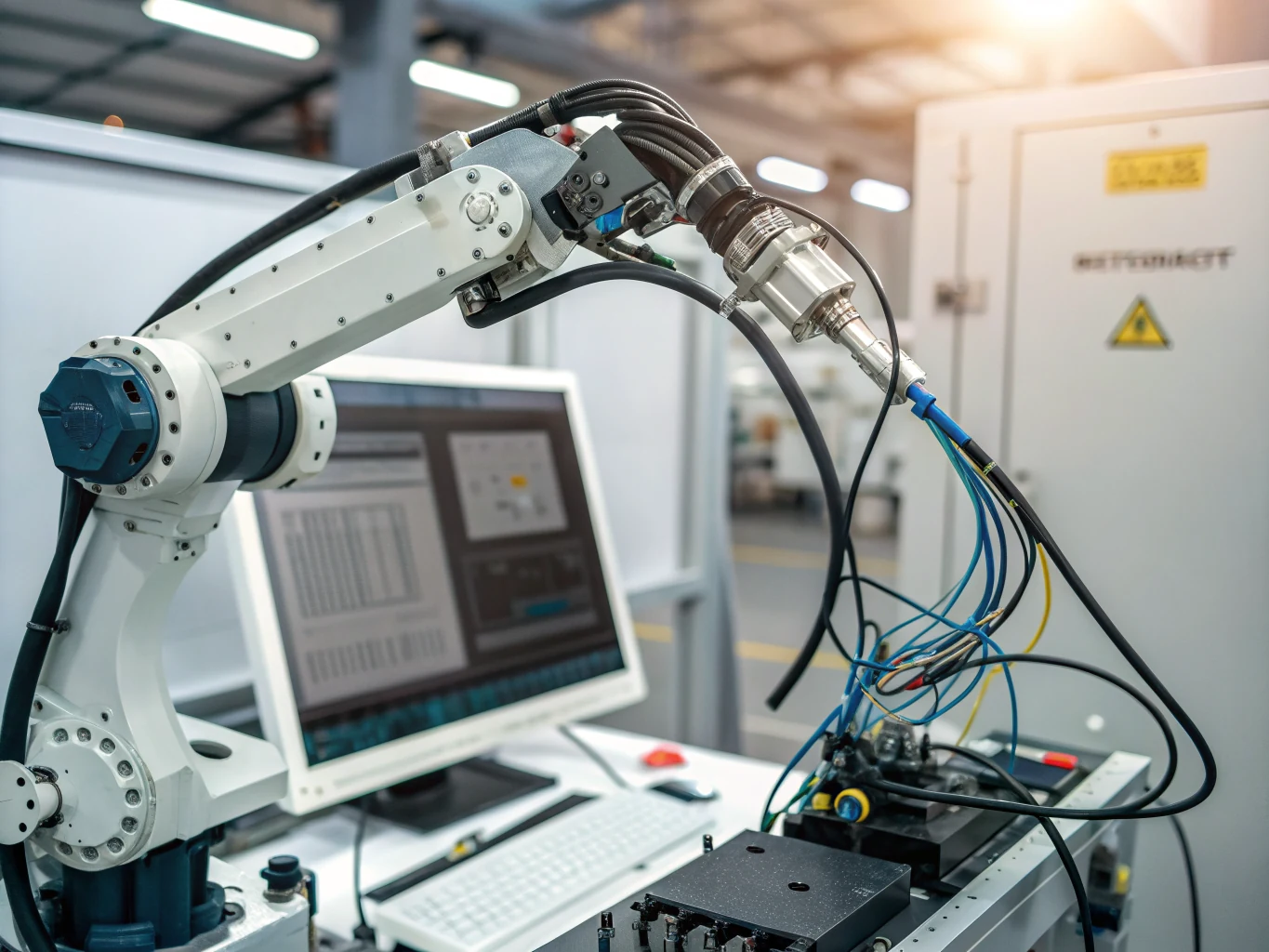
Early enterprise automation leaned heavily on basic Robotic Process Automation (RPA). These rules-based bots executed rigid keystrokes and basic data scraping between screens. The problem was fragility. The moment an administrative user interface changed a button layout by five pixels, the bot crashed. Human engineers spent valuable hours troubleshooting mechanical scripts.
Modern Hyperautomation eliminates this vulnerability. It integrates traditional RPA mechanisms with large language models, computer vision, and context-aware Autonomous Systems. Instead of looking for hardcoded coordinates, the platform interprets workflow intent dynamically. It reads unstructured PDF invoices, extracts nuanced contractual terms, categorizes support anomalies, and updates enterprise data stores without breaking.
Enterprise AI Automation services must focus on measurable workflow value rather than flashy demonstrations. Production teams prioritize data access controls, strict human oversight mechanisms, and deterministic fallbacks. When an autonomous workflow encounters ambiguous input data, it routes the edge case to a designated human supervisor, logging the incident to refine future model iterations.
Engineering Custom SaaS Platforms and Cloud Infrastructure
Scaling digital infrastructure requires resilient engineering from day one. Multi-tenant software products, subscription platforms, and data-intensive applications collapse when database queries lock or horizontal scaling hits resource limits. Architecture must be tailored around real workloads, traffic distribution, and anticipated volume.
Gavior approaches SaaS Development and Web App Development with modular, multi-tenant isolation. Each client environment operates with partitioned database boundaries, preventing data leakage while maximizing shared compute efficiency. Billing logic, role-based access management, and API endpoints must sit on hardened foundations.
Cloud infrastructure underpins this entire ecosystem. Gavior configures robust hosting and integration strategies across leading public cloud platforms:
- AWS Solutions: Gavior plans AWS infrastructure around application performance, configuring deployment pipelines, strict identity access management, cost monitoring, and automated multi-region scaling.
- Azure Solutions: Gavior designs Azure hosting, operational monitoring, and hybrid deployment workflows configured specifically for regulated enterprise environments.
- Cloud Solutions: Architecture migration strategies that lower infrastructure overhead while maintaining a 99.99% availability profile across high-traffic distributed networks.
Predictive Maintenance and Real-World Digital Twin Systems
The convergence of internet-connected industrial hardware, software telemetry, and cloud processing enables the creation of a dynamic Digital Twin. A digital twin is an active, continuously updating virtual replica of a physical asset, biological environment, or software process. By streaming high-frequency sensor readings straight into analytical pipelines, systems visualize live operational states.
This dynamic representation powers reliable Predictive Maintenance. Rather than replacing physical machinery or running database garbage collection on rigid, arbitrary calendars, machine intelligence monitors subtle shifts in vibration, thermal profiles, or memory consumption. Anomaly detection models surface failures long before physical damage or runtime crashes occur.
Executing predictive maintenance within a complex environment demands airtight Data Governance and Security. Sensor metrics, user interactions, and enterprise records must pass through verified encryption, rigorous tenant isolation, and detailed operational audit trails. Without strict governance, corrupted telemetry can distort twin simulations, triggering erroneous automated shutdowns or hiding genuine structural defects.
Frequently Asked Questions
How does AI automation enhance digital twin technology?
AI automation processes incoming telemetry streams in real time, converting raw sensor data into predictive insights. It detects patterns that escape static rules, enabling the digital twin to run automated simulations, forecast asset degradation, and trigger preventative adjustments without human latency.
What is the difference between traditional software engineering and digital engineering?
Traditional software engineering usually focuses on isolated code deliverables, individual feature sets, and localized deployments. Digital engineering combines technical design, operational strategy, continuous infrastructure delivery, and automated intelligence to create dynamic systems that adapt to shifting commercial requirements.
Which industries gain the highest ROI from digital engineering and AI automation?
SaaS platforms, financial services, healthcare technology, manufacturing, and high-volume e-commerce gain the most immediate returns. These industries handle heavy transaction volumes, strict compliance mandates, and repetitive manual administrative workflows that benefit directly from automated orchestration.
What are the biggest security and compliance risks in automated engineering workflows?
The primary risks include multi-tenant boundary breaches, unsanctioned data leakage into public foundation models, prompt injection vulnerabilities, and silent model drift. Mitigating these risks requires strict role-based access, comprehensive logging, private model hosting, and continuous data validation checkpoints.
Tactical Implementation Roadmap
Executing a transition to digital engineering and automated workflows requires a pragmatic, staged engineering approach. Begin by isolating your company's greatest technical bottleneck: identify where manual data entry, fragile scripts, or monolithic code slows team velocity. Next, audit your data governance protocols, ensuring clear authorization boundaries exist before introducing automated model pipelines.
Transition custom workloads away from off-the-shelf software when standard platforms can no longer handle your unique domain logic. Deploy small, high-impact automation components featuring deterministic fallbacks and explicit human review gates. By validating performance metrics and unit costs at every phase, your engineering organization establishes an adaptable, high-performance digital core that scales smoothly.
Ready to turn these ideas into results?
Move from insight to action with a solution aligned to your goals.