

Evaluating The ROI of Custom AI Automation Systems for Growing Enterprises in 2025 requires moving past generic efficiency claims to examine hard capital expenditure, engineering overhead, and measurable workflow optimization. Growing companies balancing complex enterprise resource planning with rigid legacy software face a strict financial reality: off-the-shelf tools fail to scale, creating operational bottlenecks. Gavior builds bespoke digital solutions, custom SaaS platforms, and advanced custom AI automation architectures that deliver predictable payback periods by replacing brittle manual processes with autonomous digital execution.
Key Takeaways
- Custom AI automation eliminates the recurring licensing bloat and scaling limits of rigid third-party SaaS subscriptions.
- Financial modeling must account for legacy system integration, maintenance overhead, and model drift over a 3-year horizon.
- True return on investment (ROI) stems from reclaimed engineering hours, reduced error rates in workflow optimization, and faster time-to-market.
- Specialized software engineering bridges the gap between raw machine learning models and production-ready enterprise systems.
Financial Modeling: Custom AI vs. Off-the-Shelf SaaS
Many finance leaders struggle to evaluate return on investment (ROI) for artificial intelligence initiatives because standard procurement metrics assume linear cost scaling. Commercial subscription models charge per seat or tier, meaning costs spike as headcount grows. Conversely, building bespoke architecture through a specialized digital engineering partner requires higher initial capital expenditure, but marginal operational costs flatline. When evaluating enterprise expenditures, decision-makers must weigh immediate software deployment velocity against the long-term drag of licensing expansion.
Growing organizations must weigh short-term deployment speed against long-term operational drag. Pre-built tools limit architectural flexibility. When proprietary data formats or specialized compliance requirements enter the picture, standard tools break down, forcing expensive workarounds. To maintain operational velocity, modern technical teams increasingly deploy customized internal scaffolding alongside advanced platforms like Gavior Orbit (Autonomous AI Content OS & Technical SEO Growth Engine) to unify software deployment with autonomous execution. This combination ensures that digital assets grow in value rather than incurring compounding technical debt.
Financial predictability is the cornerstone of enterprise budgeting. When a company relies on off-the-shelf software, vendor price hikes and forced feature updates create unpredictable balance sheet liabilities. Building custom infrastructure transfers control back to the enterprise. Capital is deployed once to construct a proprietary asset, while ongoing maintenance is strictly tied to actual operational needs rather than arbitrary vendor licensing tiers. By taking full ownership of the underlying codebase, enterprises insulate themselves against unilateral pricing changes and sunsetted features.
Core Financial Drivers of Enterprise AI Automation
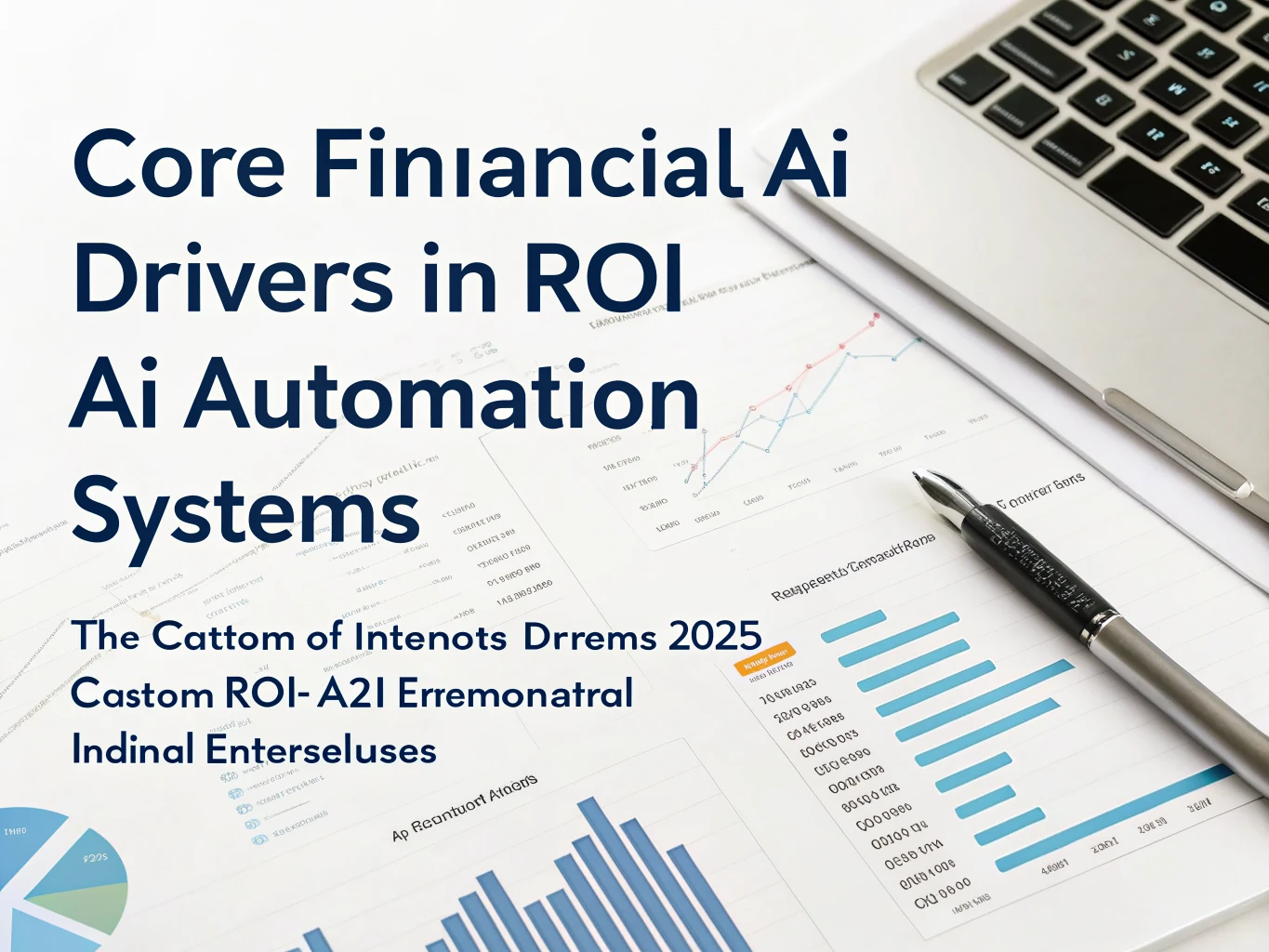
Calculating the true financial impact involves measuring direct labor displacement alongside speed-to-execution gains. By deploying specialized natural language processing pipelines and autonomous data ingestion loops, enterprises recover thousands of manual processing hours annually. These hours are redirected toward high-value strategic initiatives that directly increase revenue.
- Labor Cost Reduction: Shifting repetitive transactional tasks away from high-value engineering and operations teams.
- Error Mitigation: Eliminating manual data entry flaws that cascade through enterprise resource planning platforms.
- Throughput Velocity: Processing high-volume digital workflows in seconds rather than days, accelerating revenue cycles.
- Resource Reallocation: Empowering skilled staff to focus on product innovation rather than administrative overhead.
Beyond direct labor reallocation, custom systems unlock hidden enterprise capacity. When customer support logs, unstructured contract reviews, and multi-channel data pipelines run autonomously, internal teams redirect their focus toward high-margin product innovation. This cultural shift from operational firefighters to strategic creators accelerates organizational growth in ways that spreadsheets rarely capture during initial procurement reviews. Furthermore, faster turnaround times on client deliverables directly enhance customer satisfaction and retention metrics across competitive markets.
Comparative Build vs. Buy Financial Framework
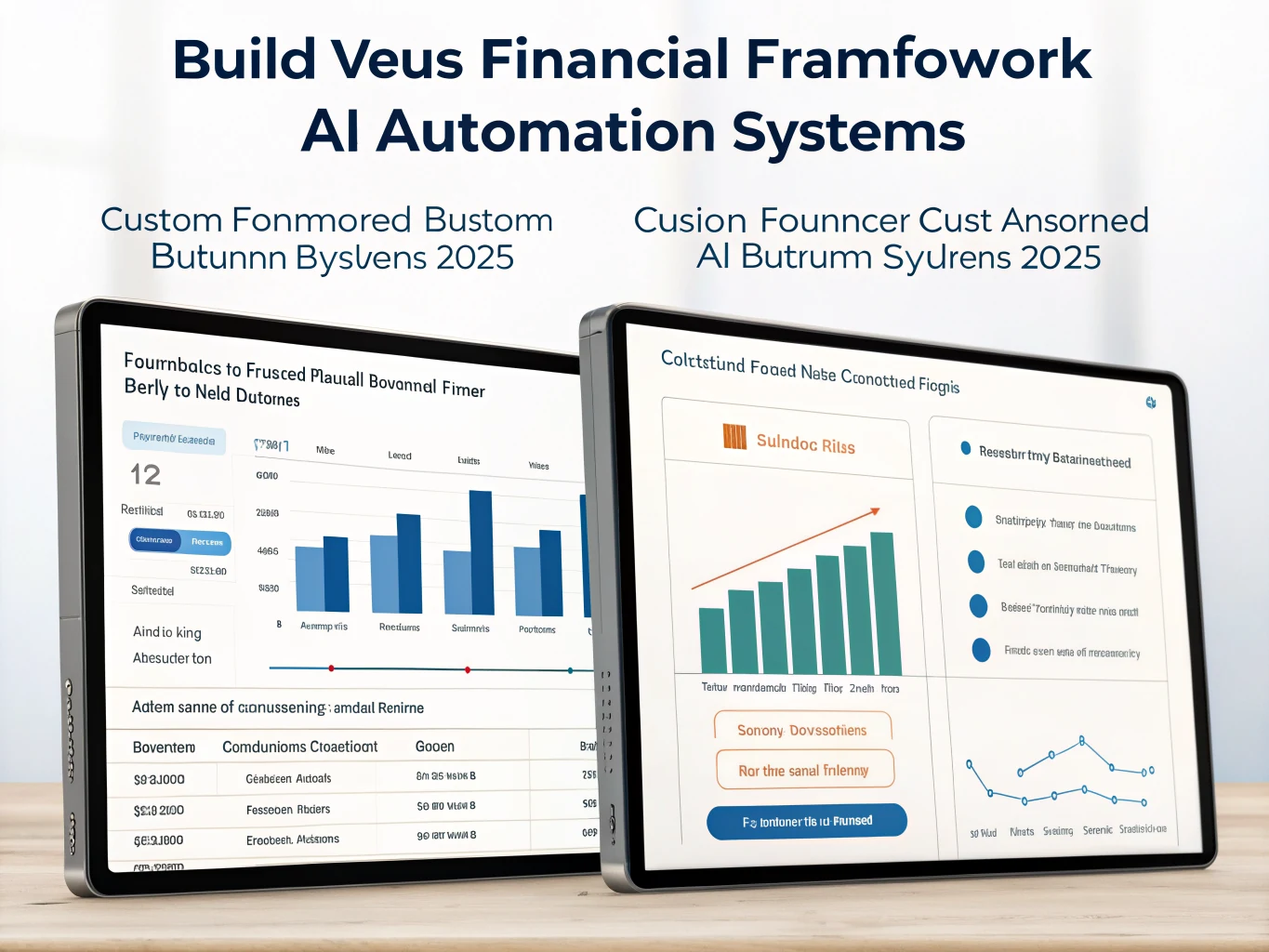
Making the right procurement decision requires structured financial analysis across critical enterprise dimensions.
| Evaluation Metric | Pre-Built SaaS Tools | Custom AI Automation Systems |
|---|---|---|
| Initial Financial Outlay | Low upfront subscription fees | Higher initial engineering investment |
| Long-Term Cost Scaling | Grows linearly per user/tier | Flat marginal cost per transaction |
| System Integration Depth | Shallow API connectors | Native, deep legacy infrastructure integration |
| Competitive Moat | Zero proprietary advantage | Complete intellectual property ownership |
| Data Governance & Privacy | Shared multitenant security risks | Isolated, sovereign enterprise data controls |
Factoring Hidden Costs: Maintenance, Drift, and Scale
An accurate financial projection never ignores long-term maintenance. Machine learning models degrade over time as enterprise data distributions shift—a phenomenon known as model drift. Without dedicated monitoring and continuous retraining loops, automated workflows degrade in accuracy. Enterprises must budget for continuous performance tuning and infrastructure monitoring to protect initial capital outlays and ensure sustained accuracy across all automated decision-making pipelines.
Furthermore, bridging custom automation with legacy databases requires specialized middleware. Ignoring these integration realities introduces technical debt that erodes projected financial gains within the first twenty-four months of deployment. Partnering with seasoned engineering architects ensures that backend data pipelines remain resilient against breaking API changes and shifting compliance mandates. This proactive architectural rigor prevents costly system outages and protects corporate data integrity.
Organizations must also evaluate the hidden costs of vendor lock-in. Proprietary SaaS platforms frequently trap enterprise data in closed silos, making data migration cost-prohibitive if the vendor changes its pricing structure. Custom engineering guarantees complete data sovereignty, ensuring that corporate intelligence remains secure, portable, and fully under internal governance controls. Maintaining this independence is essential for long-term strategic resilience.
Strategic Implementation and Payback Horizons
Achieving a positive return on investment requires viewing software not as an expense item, but as a compounding business asset. When companies transition from makeshift scripting to production-grade automation, payback periods typically stabilize within 12 to 18 months. This timeline is driven by immediate reductions in manual error rates and the elimination of redundant software subscriptions across disparate departments.
To maximize financial efficiency, engineering leaders must prioritize projects that touch high-volume data streams. By integrating automated workflows directly into existing customer relationship management and enterprise resource planning environments, teams ensure high adoption rates and immediate operational impact. The resulting efficiency gains create a sustainable financial moat that protects operating margins as the enterprise scales into new global markets.
Execution Roadmap for Enterprise Leaders
Capturing positive financial returns demands a disciplined execution framework. Organizations should audit high-friction operational silos, isolate workflows dependent on unstructured data, and partner with experienced engineering teams to build resilient, scalable systems.
Begin by mapping out repetitive data bottlenecks across departments. Next, run a pilot program targeting a single high-impact workflow, such as automated multi-channel data ingestion or customer onboarding verification. Measure baseline performance metrics before deployment, track velocity gains over a ninety-day trial, and use empirical findings to scale automated architecture across the broader enterprise ecosystem.
Ready to turn these ideas into results?
Move from insight to action with a solution aligned to your goals.
Explore Gavior Orbit (Autonomous AI Content OS & Technical SEO Growth Engine) from Gavior