Choosing between Orbital Autopilot and traditional WordPress editorial plugins dictates whether your publishing workflow scales efficiently or buckles under technical debt. Traditional plugins trap your content pipeline inside monolithic database structures, slowing down editorial calendars and bloating server responses. Gavior solves these architectural bottlenecks by decoupling content creation from legacy plugins, utilizing autonomous AI content systems and standard authenticated APIs for cross-platform publishing.
Key Takeaways
- Monolithic plugins add database bloat and security vulnerabilities directly inside your core CMS instance.
- Gavior Orbit uses native REST publishing architectures, keeping your website lean and fast without heavy plugin overhead.
- Autonomous publishing schedules content cleanly across WordPress, Webflow, and other modern architectures.
- Decision makers must weigh the long-term maintenance costs of brittle plugins against robust engineering automation.
The Architectural Flaws of Traditional WordPress Plugins
Monolithic software often feels reliable until scale introduces friction. Traditional editorial plugins execute their schedules, metadata management, and content organization entirely inside the WordPress database. Every scheduled post check, status revision, and editorial calendar query increases the load on your server, dragging down overall throughput.
Over time, bloated plugin tables accumulate orphaned metadata. Site speed drops. Database queries slow down. Security attack surfaces expand because each third-party plugin introduces external code paths into your core CMS environment. Engineering teams spend valuable sprint hours debugging plugin conflicts rather than building features that directly impact commercial outcomes. When you rely on standard web development without proper architecture decoupling, these performance costs compound with every new article published.
Furthermore, standard plugins lack context-aware optimization. Content teams find themselves wrestling with manual tagging, disjointed media library organization, and fragile cron jobs that fail silently during traffic spikes. This administrative burden distracts from core business growth and compromises editorial velocity.
What Defines an Autonomous AI Content Operating System?
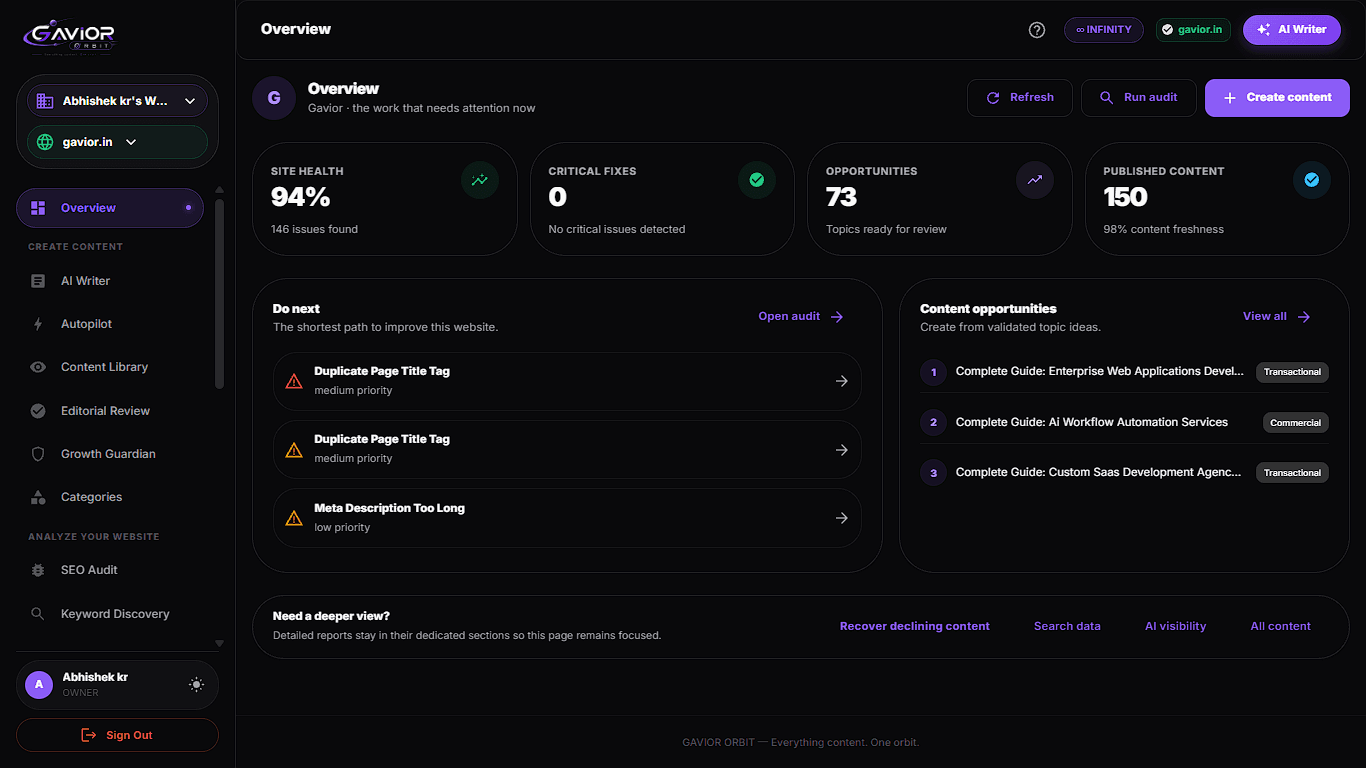
An autonomous AI content operating system operates outside the constraints of traditional plugins. Instead of managing drafts locally within a single database, systems like Gavior Orbit handle technical SEO audits, keyword clustering, and multi-channel content repurposing through dedicated infrastructure.
Content teams move beyond blank AI prompts by integrating brand-aware settings, audience guidelines, and editorial rules directly into the workflow. When content is ready, structured HTML and media transfer securely to destinations like WordPress through standard authenticated application passwords via the WordPress REST API—requiring zero local plugin footprint. This ensures your core digital product remains pristine and fast.
By leveraging advanced SaaS development principles, autonomous systems process background tasks externally. This design completely eliminates server resource contention, allowing your marketing output to scale infinitely without threatening site stability or user experience.
Comparing Publishing Workflows and Performance Implications
Performance matters. When evaluating workflow automation, system architecture dictates speed and stability.
- Plugin-Based Execution: Relies on local cron jobs and internal database triggers. If traffic spikes, background publishing tasks often timeout or fail, bringing administrative panels to a crawl.
- Autonomous API Publishing: Executes distribution externally and pushes finalized assets directly to the target CMS endpoint. Your website serves pages, not background tasks.
Engineering modern web applications requires separating concerns. By keeping the content engine decoupled from the front-end presentation layer, brands achieve higher uptime, cleaner codebases, and predictable publishing schedules. Content managers operate within a streamlined dashboard while engineers maintain clean, unpolluted codebases.
Security posture also shifts dramatically. Without vulnerable third-party plugin code running active database queries on every page load, the attack surface shrinks. Enterprise decision makers can sleep soundly knowing their digital properties are fortified against common CMS exploits while maintaining blazing-fast asset delivery.
Implementing Scalable Automation for Content Teams
Scaling output requires robust workflow automation. Moving from manual staging environments to autonomous publishing pipelines eliminates repetitive administrative friction. Editors stop formatting markdown manually, configuring metadata across multiple dashboards, or clicking publish buttons across disparate systems.
Whether your ecosystem relies on custom Next.js web development, WordPress, or Webflow collections, establishing a controlled path to consistent content protects editorial quality while multiplying output capacity. Review paths remain fully intact, allowing human oversight before any automated post goes live.
Organizations implementing these systems often pair them with AI automation and specialized software engineering to ensure seamless data flow. Editorial calendars transform from chaotic spreadsheets into synchronized publishing engines that run autonomously in the background.
Frequently Asked Questions
What are the performance implications of using automated publishing tools?
Automated tools that utilize external APIs—such as the WordPress REST API—prevent server bloat by offloading scheduling and content generation tasks away from your core hosting environment.
How do automated editorial systems differ from traditional WordPress plugins?
Traditional plugins run inside your local CMS database, adding query overhead and security risks. Autonomous systems operate externally, pushing clean HTML and media directly to your platform.
Can Orbital Autopilot integrate with existing editorial calendars?
Yes. Autonomous publishing queues synchronize smoothly with structured planning workflows, allowing teams to maintain review paths and governance standards.
Are traditional editorial plugins better for small content teams?
While simpler to install initially, traditional plugins often create technical debt as content volume grows. Modern engineering approaches offer cleaner scaling pathways from day one.
Actionable Implementation Roadmap
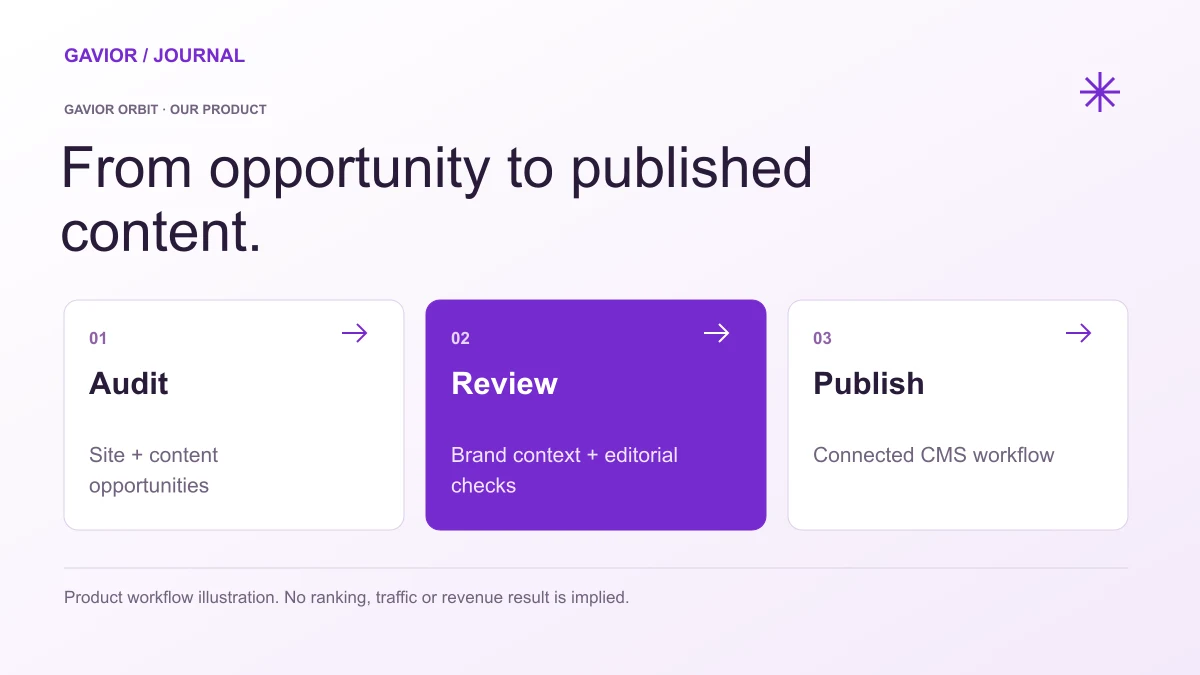
Transitioning away from brittle plugins requires a methodical approach. First, audit your current CMS environment to identify orphaned database tables and slow cron jobs caused by legacy plugins. Second, establish a decoupled staging pipeline utilizing authenticated API tokens for secure publishing. Third, integrate specialized AI automation to handle keyword clustering and draft generation externally. Finally, test the workflow thoroughly with human-in-the-loop review gates before scaling your content velocity globally.
Ready to turn these ideas into results?
Move from insight to action with a solution aligned to your goals.