
Gavior Journal · ORBIT AI · 2 min read
Webhook Revalidation After AI Article Publishing
ORBIT product editorial team
Design a secure publish event and cache refresh workflow for a headless blog, with retries and verification when a page stays stale.
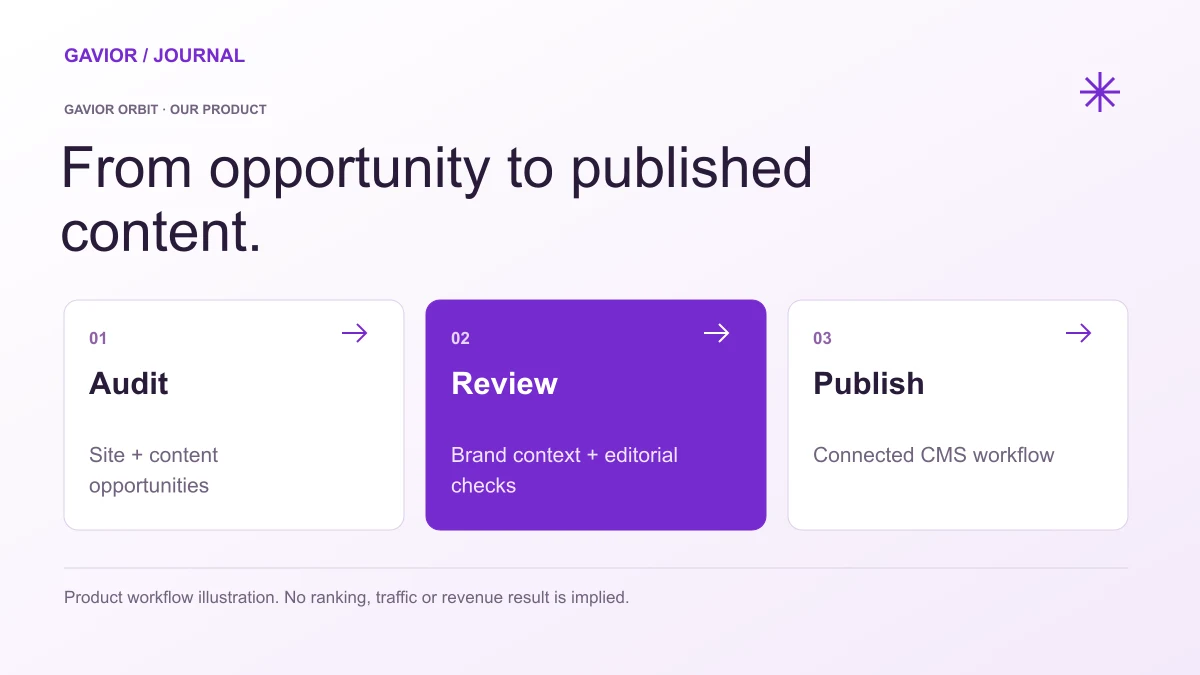
On a cached headless site, writing an article and making the public URL current are separate operations. A publishing integration should send a clear event after the database transaction commits, then verify the rendered page. Treat a webhook as a request to refresh content, not as evidence that a search crawler can already see it.
What belongs in the event
Use a stable article ID, the canonical slug, an event type such as article.published or article.updated, a timestamp and an idempotency key. Sign the payload, validate the signature on the receiving server and reject unknown slugs or domains. Keep credentials out of the URL. Record each attempt and response so an editor can investigate a missing page.
An article.updated event might refresh the article path and any listing or category path that displays its title. An article.unpublished event should also remove it from public lists and the sitemap. The exact cache API depends on the site framework and deployment mode. For Next.js, follow the version-specific revalidation documentation and test the route after a request; revalidation can mark a path for regeneration on its next visit rather than synchronously replacing every cached response.
Recover from partial failure
| Failure | Recovery |
|---|---|
| Database write fails | Do not send a publish event; retain the draft and error. |
| Event times out | Retry with the same idempotency key and a bounded backoff. |
| Revalidation succeeds but page is wrong | Alert an editor; inspect rendering and field mapping. |
| Page works but sitemap is stale | Refresh the sitemap path or its data source separately. |
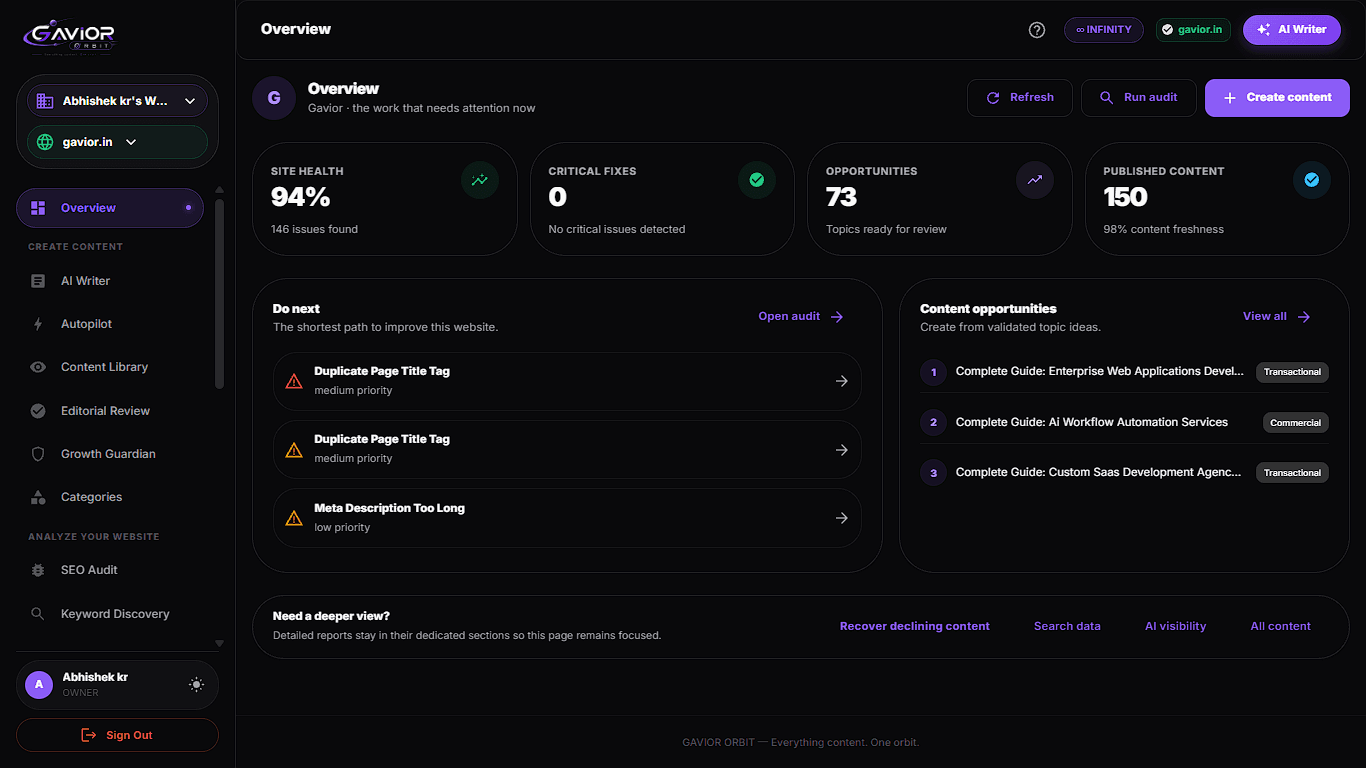
Gavior Orbit can be part of a database or CMS publishing workflow, but the receiving site's webhook, cache and observation logic remain implementation responsibilities. Test a draft, an update and an unpublish before scheduling unattended publication.
Where Orbit fits
Use Orbit to prepare and deliver a reviewed article to the connected target. For a custom headless deployment, ask the site's engineer to record the resulting article ID and emit an authenticated publish event only after the write succeeds. Orbit should be considered the content source in that flow; the site's route handler is responsible for validating the event, invalidating relevant paths and checking the public result. Supabase Database Webhooks are one possible event mechanism, and the Next.js revalidatePath reference describes the route-handler behavior. Neither source promises instant page refresh after the event.
Read the Next.js publishing contract or explore Gavior Orbit.
Gavior Editorial Team
ORBIT product editorial team at Gavior
The Gavior Editorial Team shares practical guidance on product design, software engineering, cloud delivery and AI automation.
Explore Related Gavior Capabilities
Custom website development
High-performance sites that turn attention into action.
AI automation
Practical intelligence woven into the way your business works.
SEO services
Technical and content-led search visibility grounded in useful pages.
Technology Software Solutions
Tailored engineering, automation, and enterprise systems for technology leaders.
Startups Software Solutions
Tailored engineering, automation, and enterprise systems for startups leaders.
Further Reading
A Headless Next.js Blog Publishing Contract for AI Content
Define the data, rendering and review contract a Next.js blog needs before connecting an AI content publisher to a database.
Supabase and PostgreSQL Schema for a Publishable Blog
A practical schema checklist for sending reviewed AI articles to a Supabase or PostgreSQL-backed website.