How to Plan an Online Thrift Store in India: One-of-a-Kind Inventory Checklist
Gavior Editorial Team
Commerce and engineering editorial team
Published: 2026-11-10Updated: 2026-11-10
Plan a thrift-store website around unique stock, condition photos, payment failures, shipping and clear customer policies.
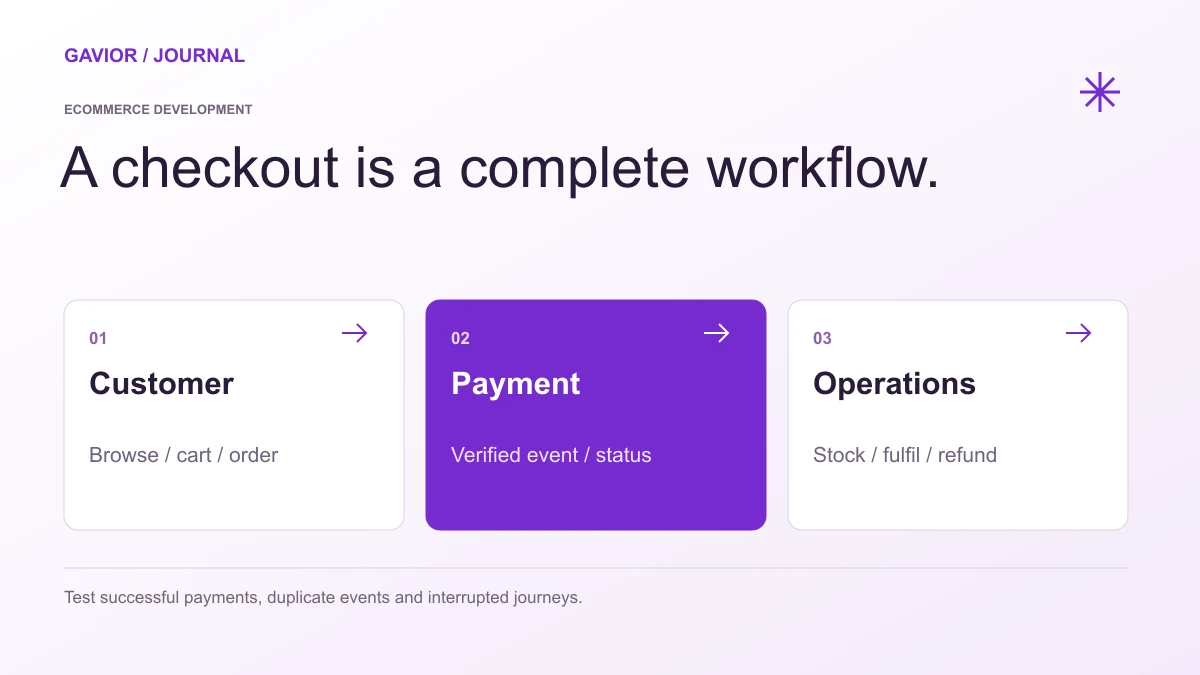
The order, payment and operational states should be reviewed as one workflow. View full-size image ↗
An online thrift store has a different inventory problem from a catalogue of identical new products: the photographed jacket may be the only jacket available. Your website needs to help a buyer judge that specific item and prevent two people from being promised the same piece.
Make your move
Ready to turn a better idea into a better business?
In an October 2026 Google India report, Google described growing search interest in thrifting over the preceding year. That is evidence of interest during its reported period, not a guarantee that a new store will rank or sell. The following store and figures are fictional planning examples, not a Gavior client case study.
Create a record for each actual item
Imagine a shop lists a single pre-loved denim jacket. Assign a unique SKU such as JACKET-042, record the precise measurements and identify the condition and any repairs. Photograph the front, back, label and the small mark on a sleeve. Include the sale price, shipping terms and quantity of one.
Avoid describing items only as “good condition” if the buyer needs details to decide. Use a consistent condition guide, but make specific defects visible on each listing. Confirm rights to all imagery and descriptions; do not reuse a supplier's photograph if it does not represent the item being sold.
Record
Owner's decision
Identity
Unique SKU, category, size and measurements
Condition
Grade, known defects, repairs and accurate photographs
Availability
Actual quantity, reservation rules and selling channels
Fulfilment
Shipping regions, delivery estimate method and packing responsibility
After sale
Return eligibility, customer contact and exception handling
Decide when the one item becomes unavailable
The shop needs a single source of truth for stock across its website, physical shop and any marketplace. Document who updates stock after an offline sale and how frequently connected systems synchronize. Simply hiding an item in one channel may not immediately update another.
Agree a checkout state machine before launch:
A shopper starts checkout. Decide whether stock is held and, if so, for how long.
The payment succeeds. Confirm the order and make that SKU unavailable for further sale.
Payment fails, expires or is cancelled. Release any temporary hold according to the agreed rule.
Two buyers attempt checkout close together. Ensure the system confirms only stock it can actually allocate; test the failure message and refund process as applicable.
An owner corrects a mistaken offline sale. Record the correction and notify an affected shopper promptly.
These are acceptance cases for your developer and payment provider, not features automatically included in every platform. Choose the precise reservation and reconciliation behaviour in the written scope.
Make trust visible before checkout
Show who operates the store and provide a working contact method, clear condition descriptions, total-price and delivery information, and a policy explaining how the store handles problems. Decide which items can be returned and how buyers request help; have a qualified adviser review the applicable rules for your business. Avoid promising delivery dates the fulfilment operation cannot support.
On mobile, check that measurements and defect photos are readable, the cart communicates stock changes, and customers can recover from payment errors. Test with sample orders in an approved payment sandbox rather than charging real customers just to test the flow.
Help search engines understand available items
Give each intended product page a clear title, visible condition and availability, and useful internal links from category pages. Product structured data can help Google understand eligible product information, but it does not guarantee a particular search appearance. Google's product documentation explains the supported markup; keep any markup consistent with what the shopper can actually see.
Decide what happens to sold listings: retain them, redirect them where appropriate, or remove them according to the store's content and inventory strategy. Do not present a sold piece as available to attract traffic. For a broader technical foundation, see our e-commerce product discovery checklist.
Prepare a brief for a developer
Share the number of unique products added weekly, selling channels, sample inventory records, payment and delivery providers, expected product photos, existing domain, and the person who handles orders. Ask the proposal to define stock sync, failed-payment recovery, admin training, third-party charges and handover.
Gavior can discuss a scoped e-commerce development project. A useful first release is the one your team can keep accurate after launch.
G
Gavior Editorial Team
Commerce and engineering editorial team at Gavior
The Gavior Editorial Team shares practical guidance on product design, software engineering, cloud delivery and AI automation.