
Gavior Journal · ORBIT AI · 2 min read
Build an AI Content Topic Cluster from Buyer Questions
ORBIT product editorial team
Turn real buyer questions into a focused topic cluster with one hub, distinct supporting articles and useful internal links.
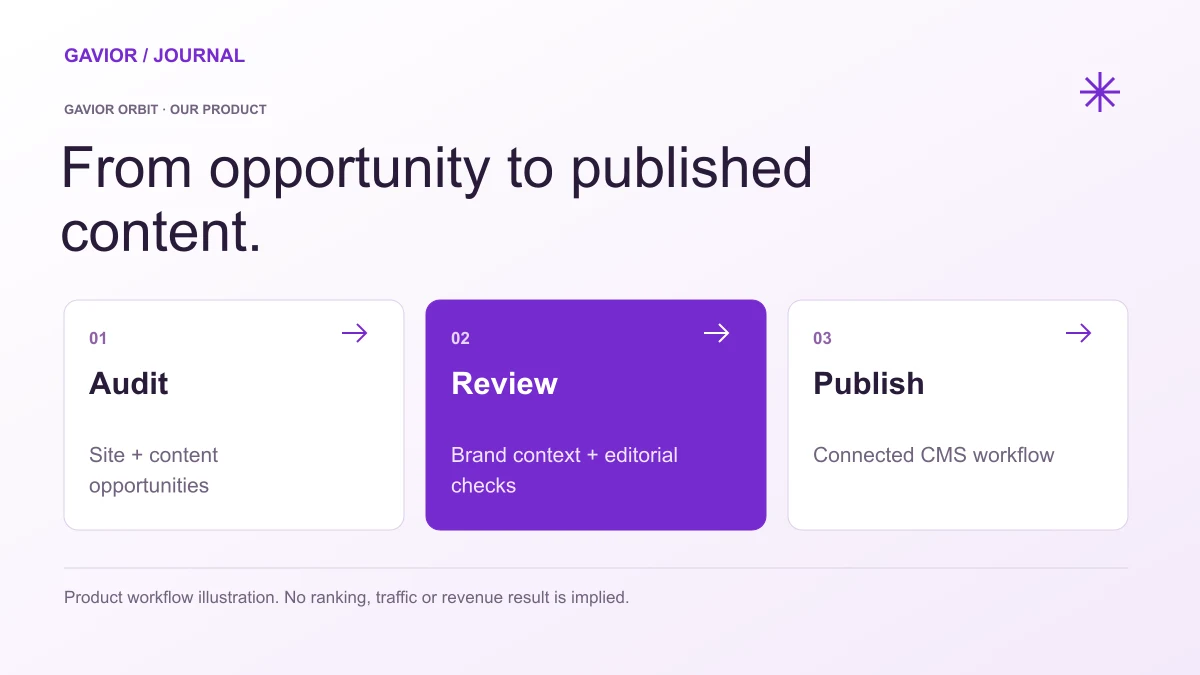
A topic cluster is not a list of keyword variations. It is a set of pages that answer different questions in the same buying journey. The hub defines the broader problem; each supporting guide handles one decision, constraint or implementation step that would make the hub too long.
For example, a hub about automated blog publishing could link to separate guides on WordPress credentials, Shopify product context, headless database schema and editorial approval. Those are distinct jobs. Creating four versions of “best AI blog writer” would give a reader little reason to visit more than one.
Start with evidence, not a volume target
Collect questions from sales calls, support tickets, product documentation and Search Console queries. Sort them by what the reader is trying to do: understand a concept, compare approaches, implement a connection or troubleshoot a failure. Note who can verify the answer. A technical integration guide needs a developer review; a pricing guide needs current commercial data.
For every proposed article, write one sentence in this form: “After reading, the reader can ___.” If two pages have the same answer, merge them or sharpen the boundary. Then choose one existing page as the hub and draw only the links that help a reader continue the task.
A compact cluster brief
| Field | Example |
|---|---|
| Audience | Developer connecting a headless blog |
| Specific question | Which fields must a publisher send? |
| Unique answer | Article schema and lifecycle contract |
| Evidence owner | Developer who maintains the site |
| Next page | Revalidation and failure-recovery guide |
Gavior Orbit can plan topics using website and brand knowledge, but your team supplies the distinctive questions, proof and product limits. Review the proposed map before scheduling drafts. Revisit it when customers ask new questions or a platform changes its API.
Where Orbit fits
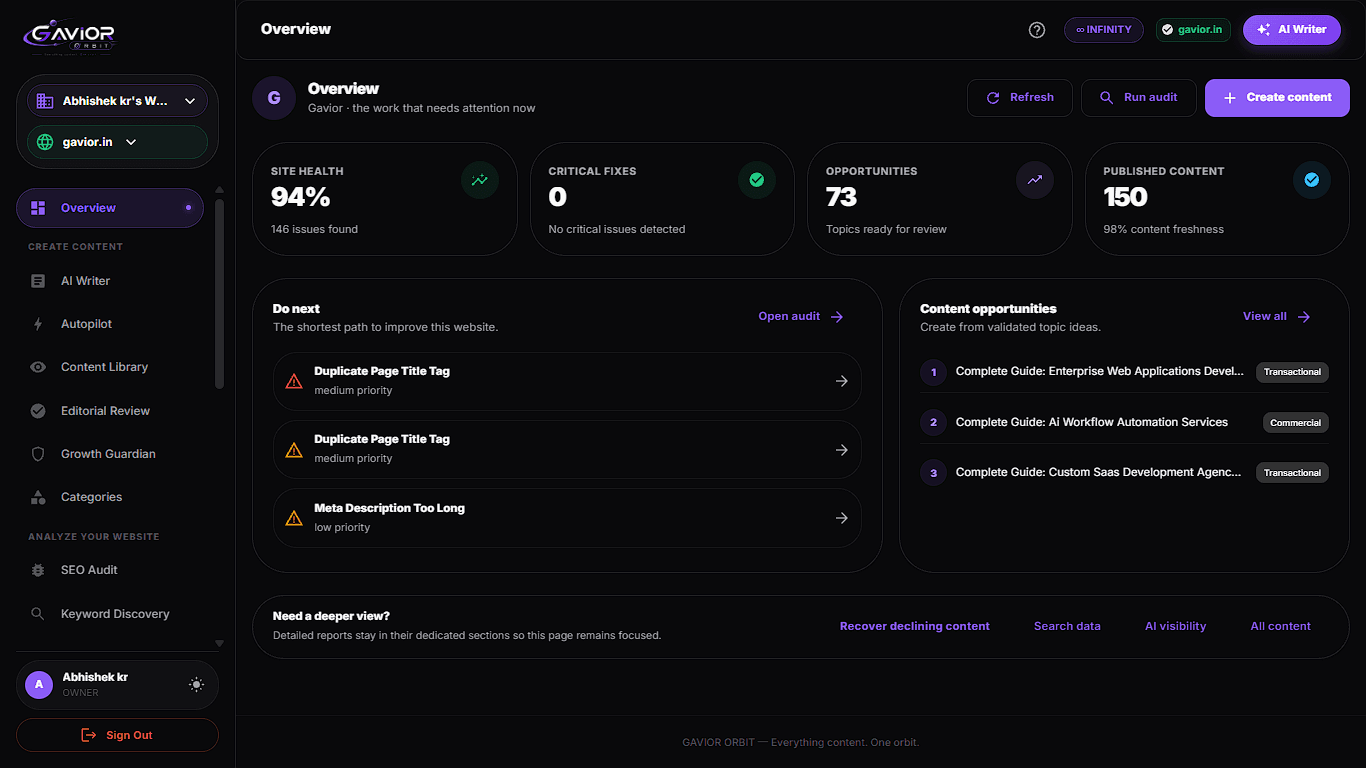
Feed Orbit the current website, its service or product descriptions, and additional knowledge from the team. Review its suggested topics against the question-to-page map and keep only ideas with a distinct audience and outcome. For each approved idea, put the intended hub and next-step URL in the brief. After an article is drafted, inspect its suggested internal links for both relevance and reachable destinations. This uses Orbit's planning and verified-link workflow while leaving cluster architecture with the people who know the buyers.
Explore Gavior Orbit and the audit-first planning guide. Google's people-first content guidance is a useful quality test for every page in the cluster.
Gavior Editorial Team
ORBIT product editorial team at Gavior
The Gavior Editorial Team shares practical guidance on product design, software engineering, cloud delivery and AI automation.
Explore Related Gavior Capabilities
AI automation
Practical intelligence woven into the way your business works.
Digital marketing
Plan measurable campaigns across search, social and email, with audience targeting, conversion tracking and regular reporting.
SEO services
Technical and content-led search visibility grounded in useful pages.
Technology Software Solutions
Tailored engineering, automation, and enterprise systems for technology leaders.
Startups Software Solutions
Tailored engineering, automation, and enterprise systems for startups leaders.
Further Reading
Autoblogging.ai vs Gavior Orbit: Publishing Workflows Compared
A source-linked comparison of AI blog planning, WordPress and Shopify publishing, headless Next.js delivery, review controls and pricing models.
A 90-Day Rollout for SEO Content Automation
A phased plan to audit a site, test one publishing target, build a useful content cluster and measure before scaling AI-assisted output.